
Chaos here!
Happy Halloween!
THE BACKGROUND
Confetti and I started hosting Halloween parties soon after we met. In 2019, after buying our house together, we decided to challenge ourselves (and our friends) by creating an escape room style puzzle adventure. This experience involved multiple puzzles, codes, ciphers, and clues strewn around the house. Hiccups and missteps happened, such as just expecting our friends to figure out there was a puzzle quest instead of creating an official start, but overall, people seemed to enjoy themselves.
Since then, we’ve continued creating puzzle challenges yearly. Our theming has involved following in the steps of a great adventurer, exploring a series of mysterious happenings (Scooby Doo Style) to gain membership to a mystery solvers’ guild, a poorly executed RPG-esque choose path scenario, and besting multiversal doppelgangers who wanted to replace our friends. We included a plethora of ciphers, codes, puzzle types, riddles, deductive pieces, and more. Every year, it’s about learning from what we’ve done before, providing something new, and trying to create an enjoyable experience for our friends (which can be tough when dealing with a lot of personalities and not really getting to playtest our puzzles beforehand).
THIS YEAR’S PUZZLE – INSPIRATIONS AND CREATION
One of the hardest parts of planning a puzzle experience is coming to a consensus of what we want to create. Confetti and I each offered our own ideas about theming and our own thoughts on how the puzzles should be structured.
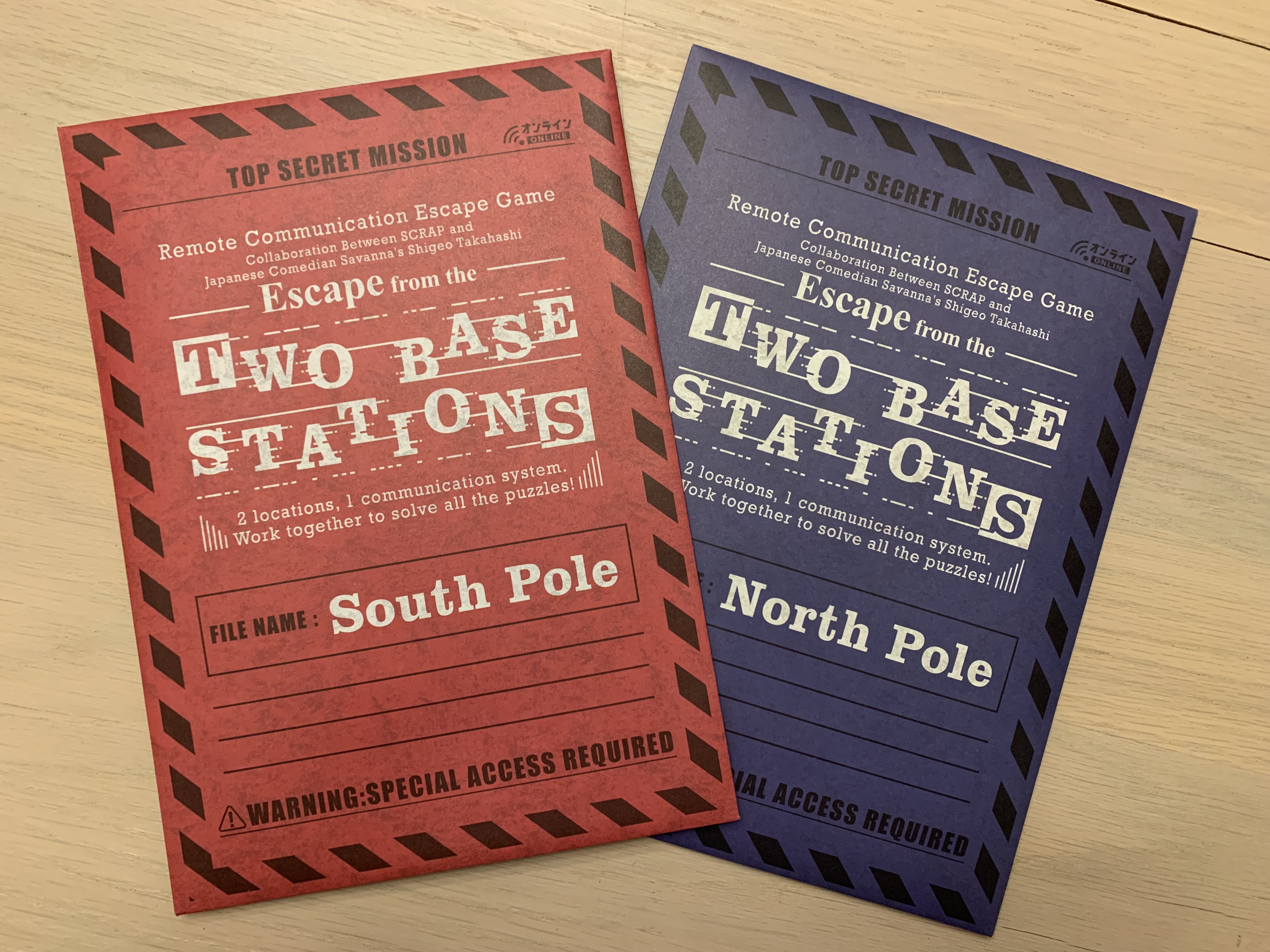
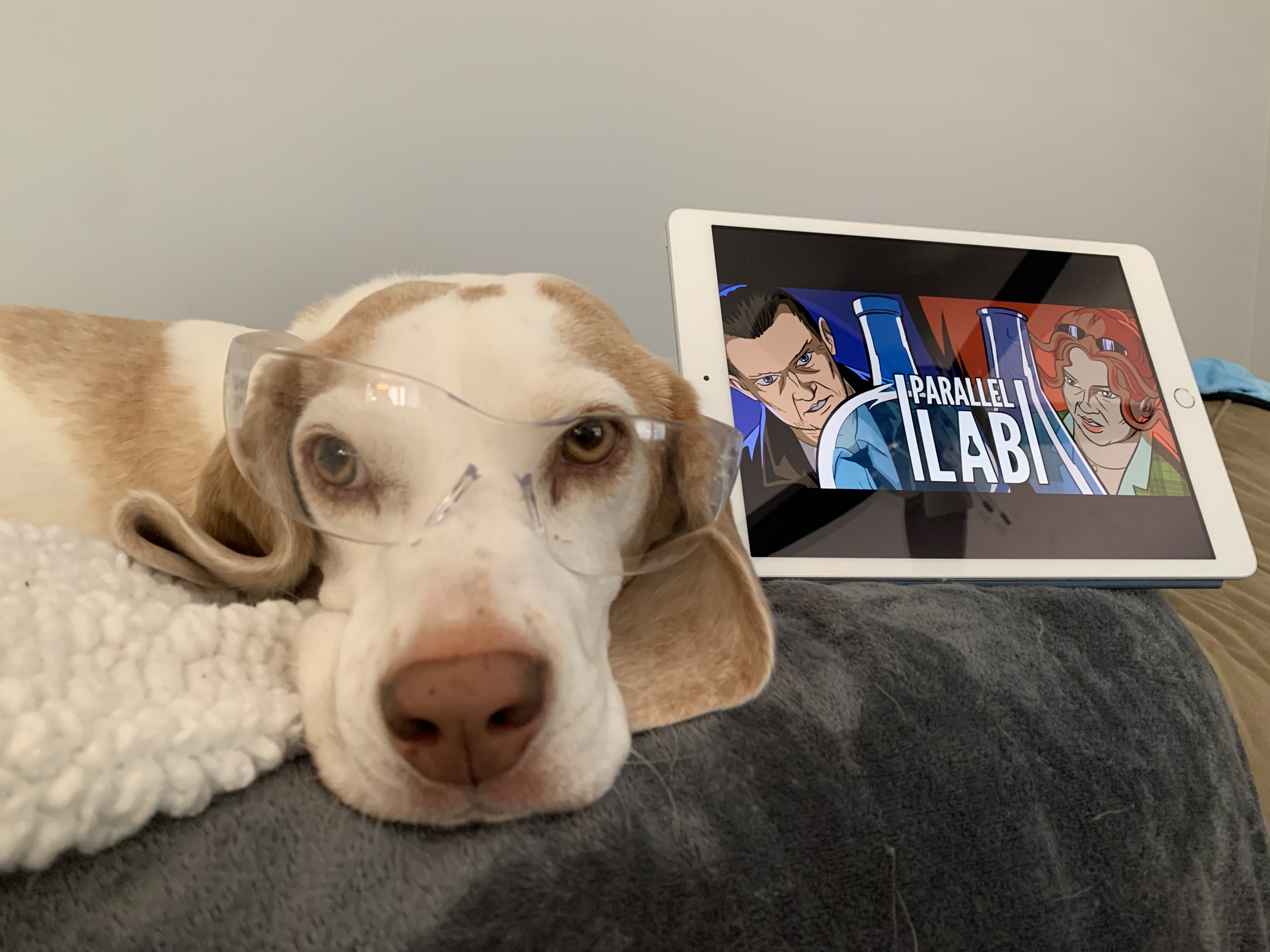

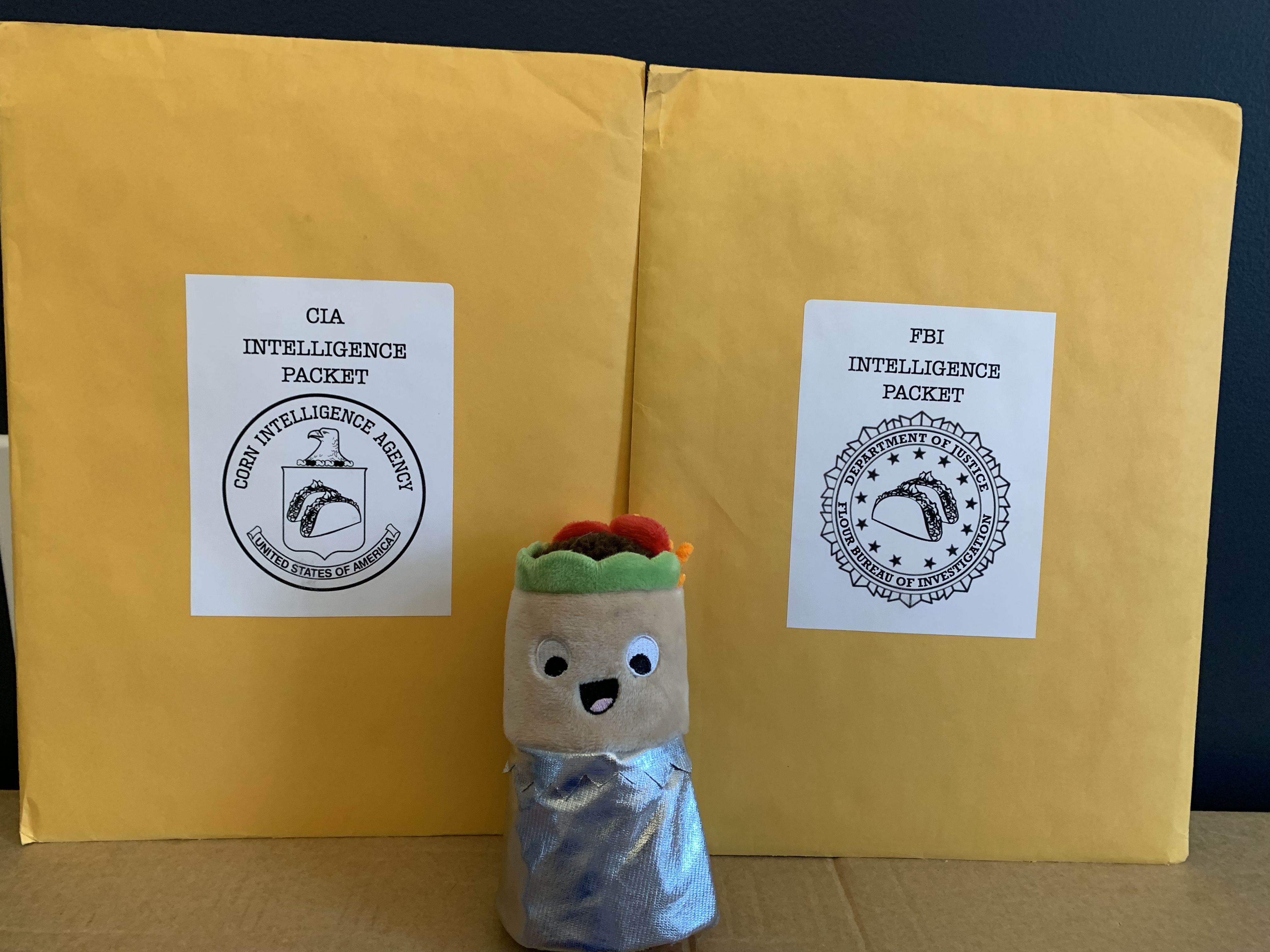
Confetti wanted to take inspiration from the board game Almost Innocent, which would have our friends cast as amnesiacs who need to get information to one another. Having played a number of other asymmetrical information games such as Escape from the Two Station by SCRAP, Taco Twosday by Trapped Takeout, and Parallel Lab by Eleven Puzzles, we both liked the idea of having our friends need to exchange information and clues to progress.
Asymmetrical information is great because it forces players to interact, which tends to be a goal of the party, and it also makes sure that everyone has a role. Nobody can race through all the puzzles, leaving others with nothing to do. Players actually work together, instead of simply in parallel. In the end, there is a shared experience to reflect upon.
However, we worried a bit after last year’s puzzle experience. Last year, we had our friends working on separate puzzle tracks all within the same space. For the most part, they could progress at their own pace and seek clues for themselves. To keep the party social though, we did hide a few clues for every puzzle track together, locked behind communal puzzles. Sadly, our friends really stunk at actually coming together, even when told directly that they would need to work together or should share information with one another (It’s easy to blame them, but we probably should have clued things better).
Confetti worried about the challenges of cooperation a bit more than I did. I saw the cooperative element as a challenge to overcome. Could we actually get everyone to work together successfully and to share information without issues?
The theme transformed a few times, originally starting with everyone having to prove their innocence from a crime to everyone having to figure out what happened at the party the night before. We had a rare Sunday party, so it seemed appropriate to have the story involving what occurred on the usual party night.
Of course, puzzles can’t simply exist in isolation. They need a delivery system. Confetti really wanted journals that might work more like legacy game booklets. Players would be able to put stickers in their books as they unlocked memories and information. I really wanted to incorporate a bookshelf into the puzzle system. The bookshelf would help keep things contained instead of needing to transform our whole garage again or to figure out how to properly clue our whole house without too many red herrings and distractions.
We went back and forth on our ideas a bit and in the end, we decided that the bookshelf would play an important role as a home for most of the physical clues, while each player would get binders with pages that they could progress through only as they completed challenges.
The final big peace of the puzzle involved technology. Confetti loves incorporating tech into our puzzles. Previously, Confetti came up with ideas that included phone calls, QR codes, changing light colors, sounds, and more. This year, she really wanted to include our Alexa Echo dot. Players would need to give her answers, and then she would return prompts, mostly to turn to the next page, but sometimes other things as well.
The heavy use of Alexa was Confetti’s must-have in exchange for a few of the aspect I got to keep from my original vision as well, such as my bookshelf.
THIS YEAR’S PUZZLES – THE PUZZLES AND MECHANICS
Each player started with a “memory binder.” Since the binder represented their memories and what they had in their heads, they could not show others the inside of their binders, and they could not read things verbatim.
The bottoms of pages either had a stop sign or a turn the page symbol. Players would need to stop on stop-sign pages and would only get permission to progress as puzzles were completed. The overall structure of each binder mirrored each other, but there were differences in information, clues, and sometimes puzzles.
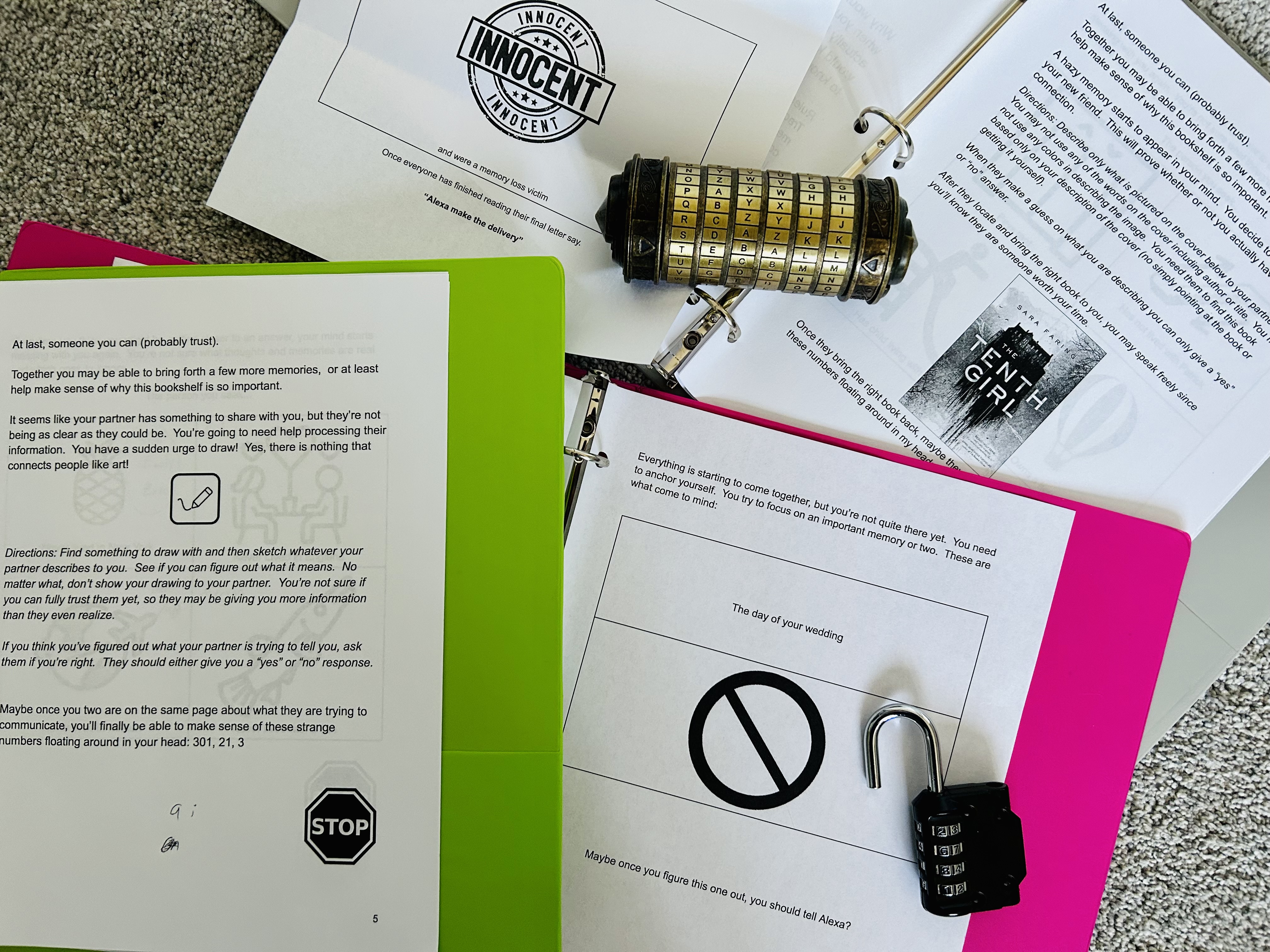
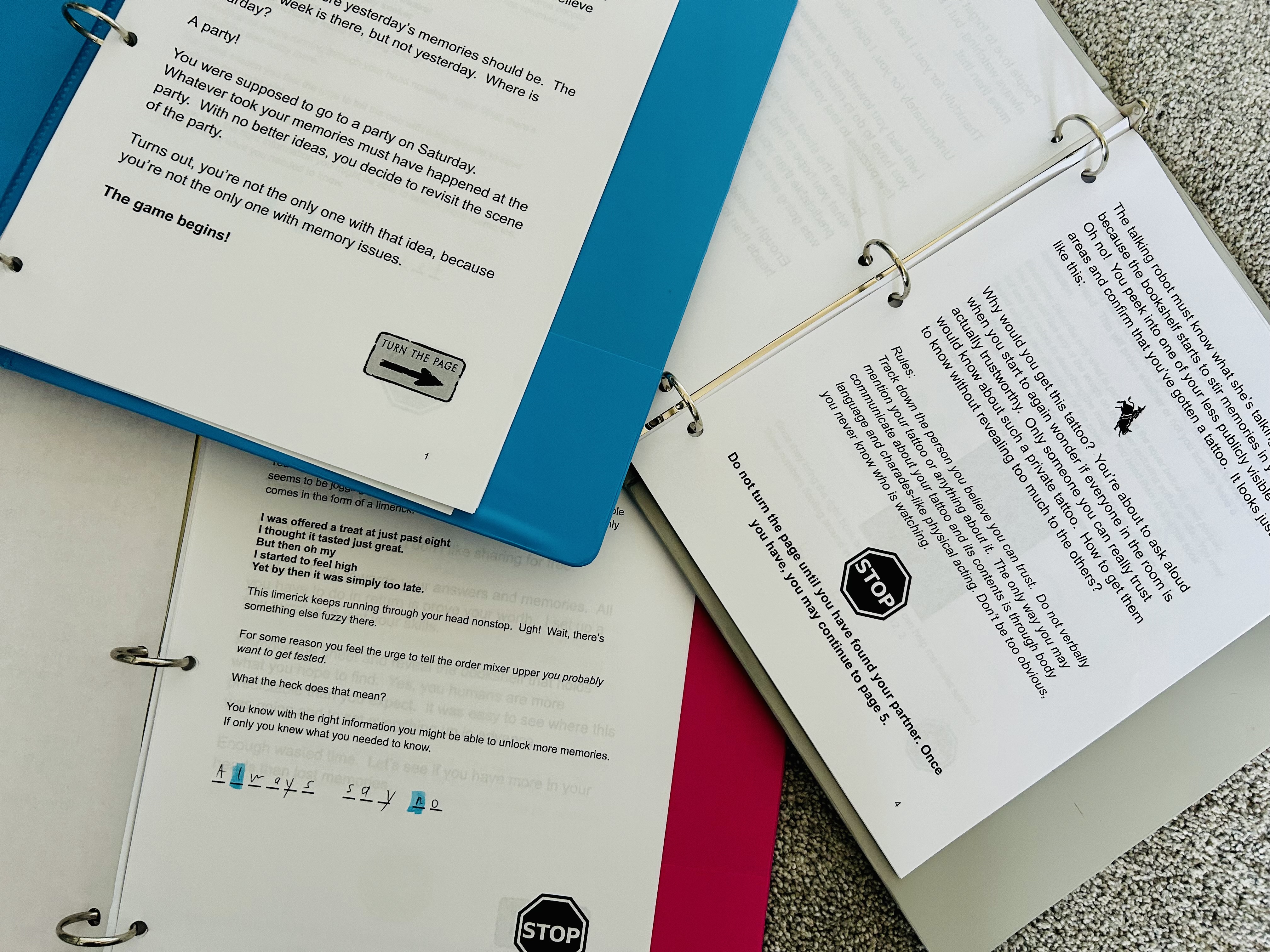
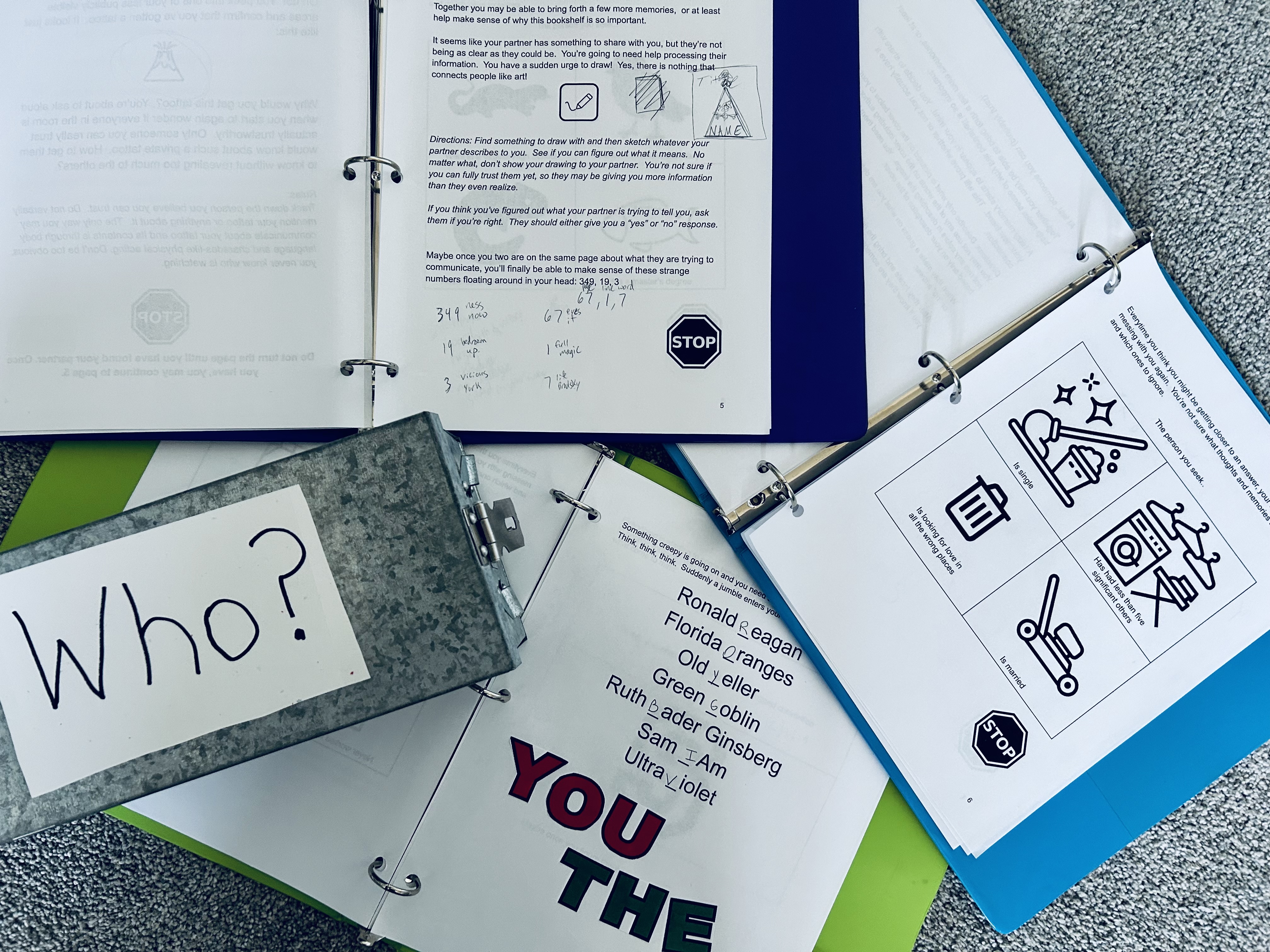
As previously stated, players were often given unique information that needed to be combined to form a complete answer. Sometimes the answer led to opening locks, but often it led to messages to feed to Alexa for further directions and information. The overall basic chain of puzzles followed this format:
- Players were all given a unique limerick and message to pass on. The message fit another player’s actions from the night before as described by their limerick. Once they had their message they would plug it into the appropriate spaces inside their memory binder. Highlighted spaces would reveal two letters for each person. Using a number hidden in each limerick, the letters could be arranged into a message to help players progress. (This would also introduce the bookshelf into the game)
- Next, the majority of players had an icon in their binder that represented a tattoo they had gotten the night before. They had to find the person in the room with the matching tattoo without speaking about the tattoo itself, only using body language and charades-like gestures. One player did not match the others, so they simply had the task of trying to fit in, but talking about random topics and moving their body in their own unique ways. That players’ job was to be a living red herring.
- Once everyone found their partner, one player had the picture of a book cover and the other had space to draw. Working within some established limits, the one player had to describe the image as the other drew the cover privately. The receiving player then had to find the correct book off the introduced bookshelf. Once the book was found, both players had part pieces of a page, line, word cipher to locate two words. Then, the larger group would bring their words together. The odd player, with no partner, had their own puzzle to solve which would put the obtained words in the correct order.
- On the next page, players had images tied to deductive style clues, such as “not the oldest in the room” or “has been out of the country in the last three years.” The Alexa in the room could give players their fortunes if they ask, “[their name] fortune.” The fortune included one of the images, cluing that that image was the relevant clue. When the correct deduction clues were combined they pointed to one person in the room. A lockbox with the label “Who?” on it had a four digit lock. When the correct person’s birthday was entered into the lock, it would open (images of cake and balloons were on the bottom of the box to help clue towards the use of a birthday).
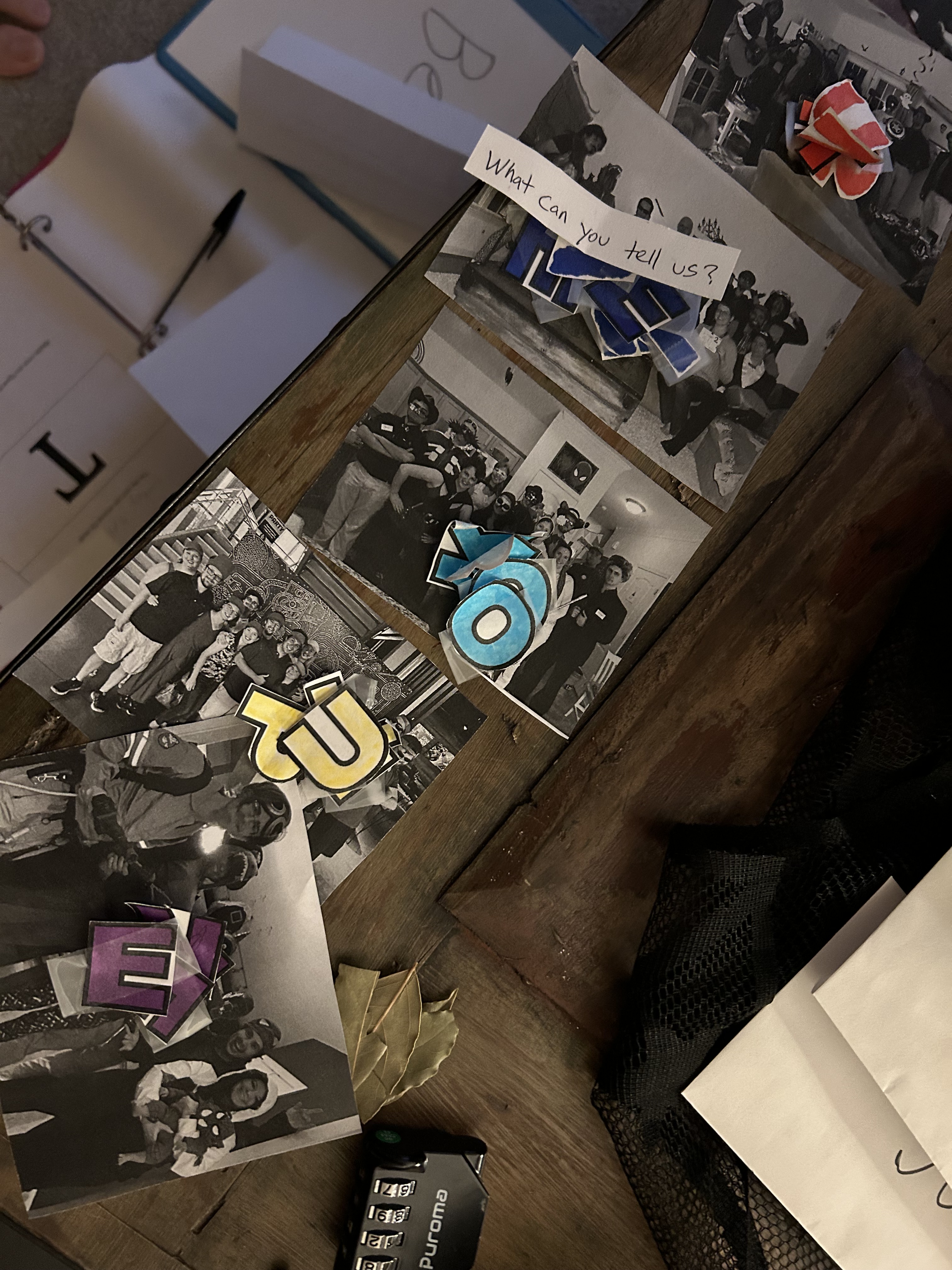
- All over the shelf were colored letters. On their next binder page, most players had one additional colored letter, with each color being represented in two people’s binders. Five colors were represented across ten players. The eleventh, solo player, had some fill in the blanks to clue towards ROY G. BIV, and two complete words each in its own colors. When all seven words were placed in rainbow order, they gave the phrase “You Must Pull the Book Shelves Free.”
- On the back of the shelves were markings which when combined gave the word “recall,” which could be entered into a cryptex.
- On the final page of their binders, players had two clues: a symbol and an event from their own lives (wedding date, college graduation, birthday, birth of a child, etc.). If they put their dates in chronological order and then put their symbols in the same order they would get another message. This would clue them in that someone in the room could not be trusted (it’s Alexa).
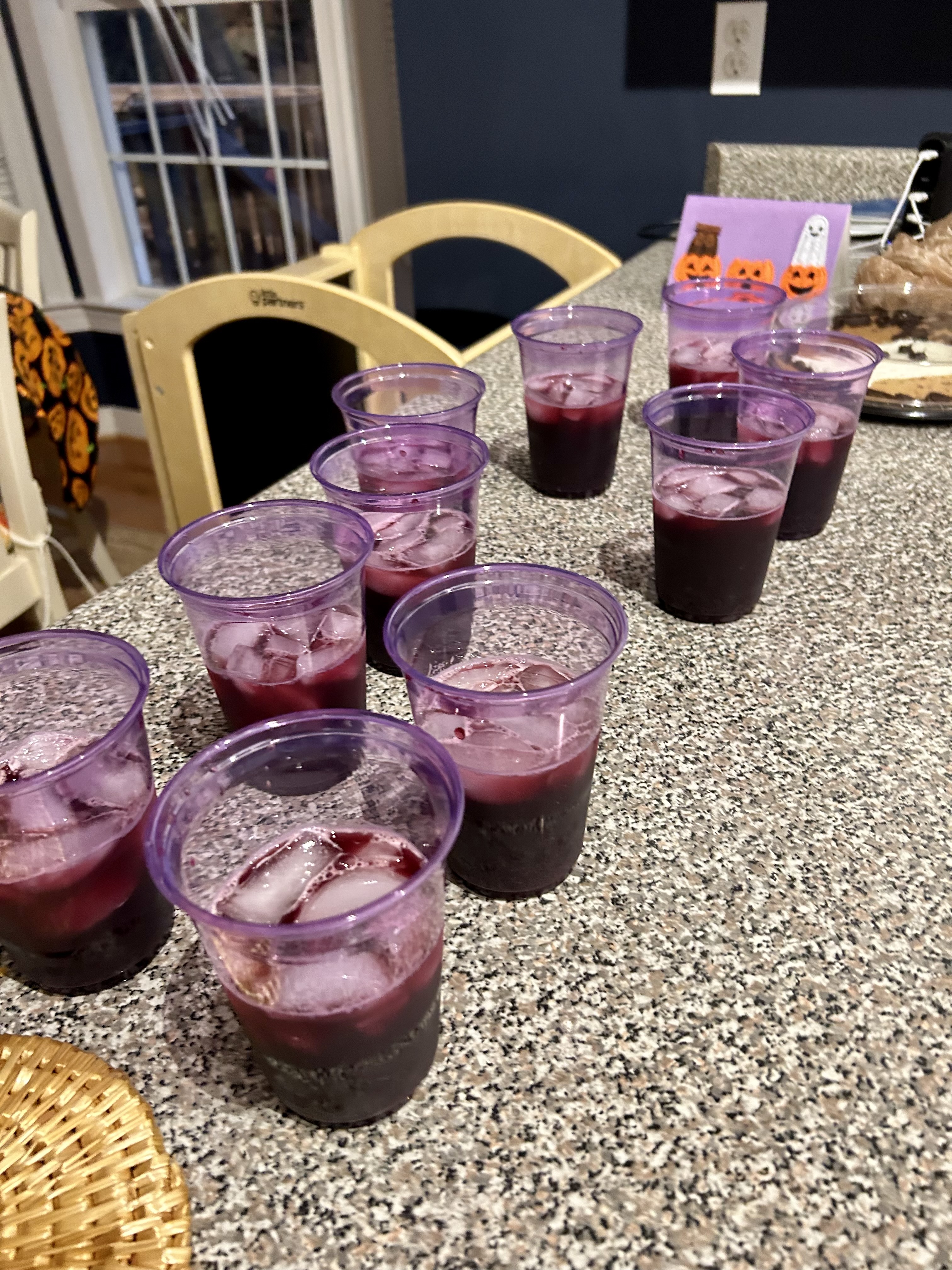
- As the final act of the entire game, players would learn that they had been poisoned but that a memory fixing potion was also available… maybe. Each player would have to decide whether to drink or not. The possibility of three unique endings was present depending on whether players chose to all drink, all abstain from drinking, or to have some drink and others not.
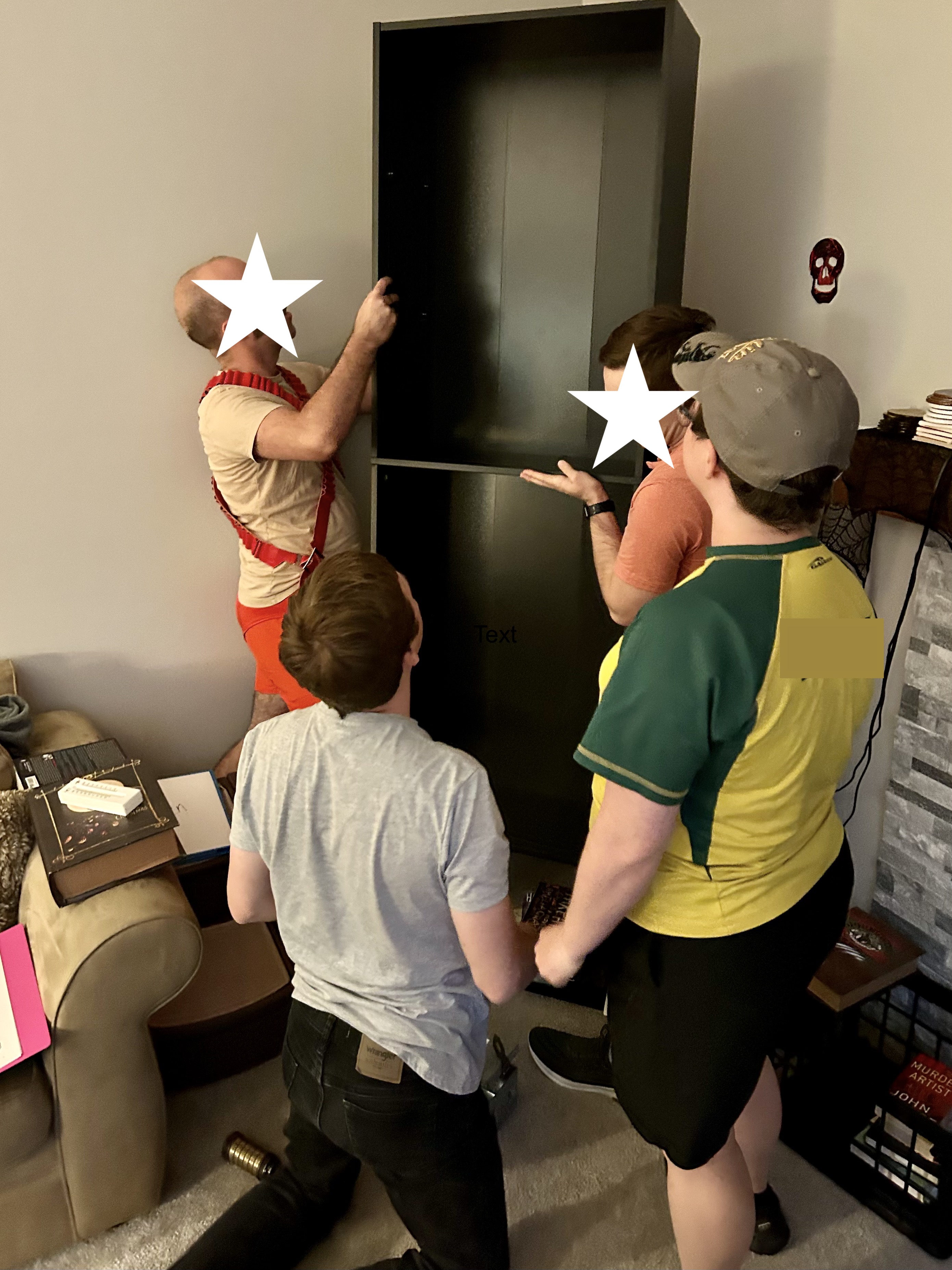
THE PARTY
Overall, we got positive feedback on our puzzle challenge (though I guess they could have just been nice because they’re our friends). I am happy to say that our friends did a much better job working together this year and they successfully accomplished the game’s tasks. A few notes from the experience:
- It did take players a bit to warm up to successfully exchanging information as a whole group.
- Some rules were definitely broken in terms of how information got shared, but as long as it didn’t outright spoil the puzzle and people had fun, we were okay with it.
- Our puzzles were definitely tailored to the expected guests list. We had two people drop last minute and another show up who didn’t originally RSVP, so some adjustments had to be made, along with myself taking on the role of a missing player for brief moments of time. It all worked out. I mostly made sure a few key pieces of info made it into players hands when it would actually be needed.
- Alexa actually worked smoothly and we didn’t have any of the tech problem we feared
- While some of the puzzles took a while to actually figure out, none of them seemed to frustrate players or to be out of their ability levels.
- The final to drink or not to drink challenge was more social conundrum than puzzle, so that didn’t fit quite as well with our overall activity. I think the group might have preferred a solvable final solution than one based on gut instinct and logic based on emotion. Wasn’t a game breaker, but definitely something to consider for next time.
- In the end, most of the group drank, but a few held back.
FINAL WRAP UP
I am happy with this year’s puzzle as a whole. As always, there are plenty of improvements I would make if I ran it again, but as a one-off, un-playtested experience, I am pleased with what we created. I shall just have to use my new idea to inform next year’s puzzle challenge, which I already have some ideas for forming in my mind.
Our friends appeared to enjoy the party activity, so that is a big plus too. They keep coming back year after year, so we must not be too bad at our puzzle designs. I accomplished the cooperation aspect that I really wanted to make work, and our puzzles were unique from the previous year, so it didn’t feel like a retread. I also tried to keep this year’s challenge a bit more budget friendly, and that worked too. Outside of the bookcase and the cost of printing materials, we mostly used items we already had on hand. I’m going to claim this year’s puzzle challenge a success!



 Chaos & Confetti
Leave a comment