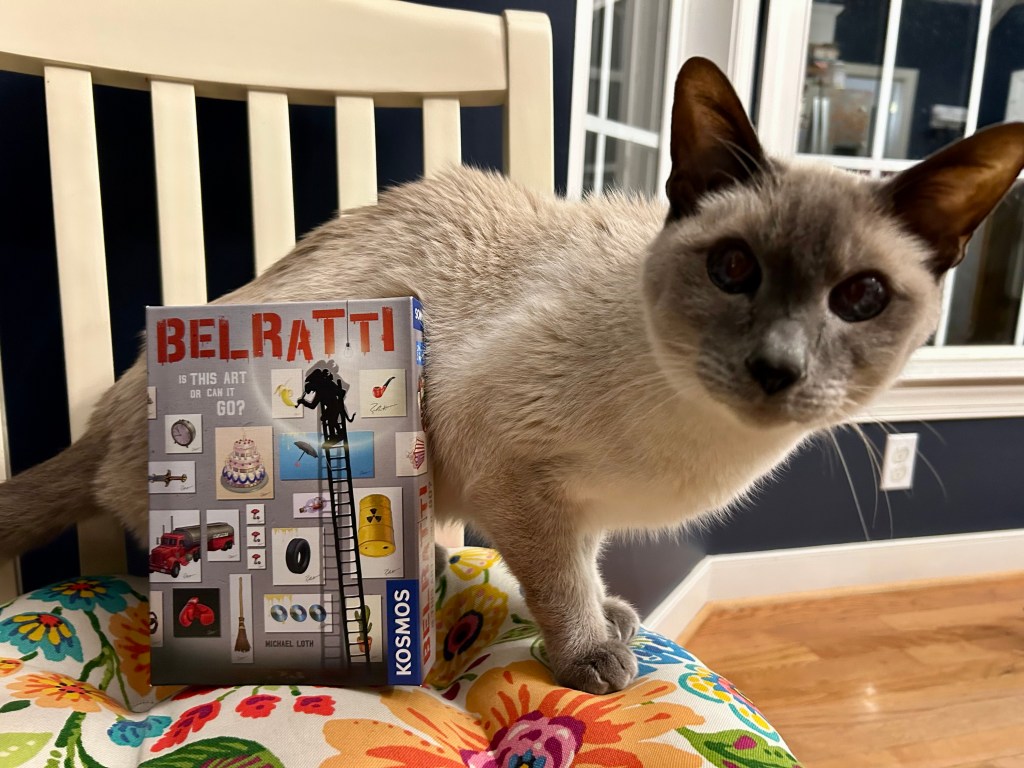
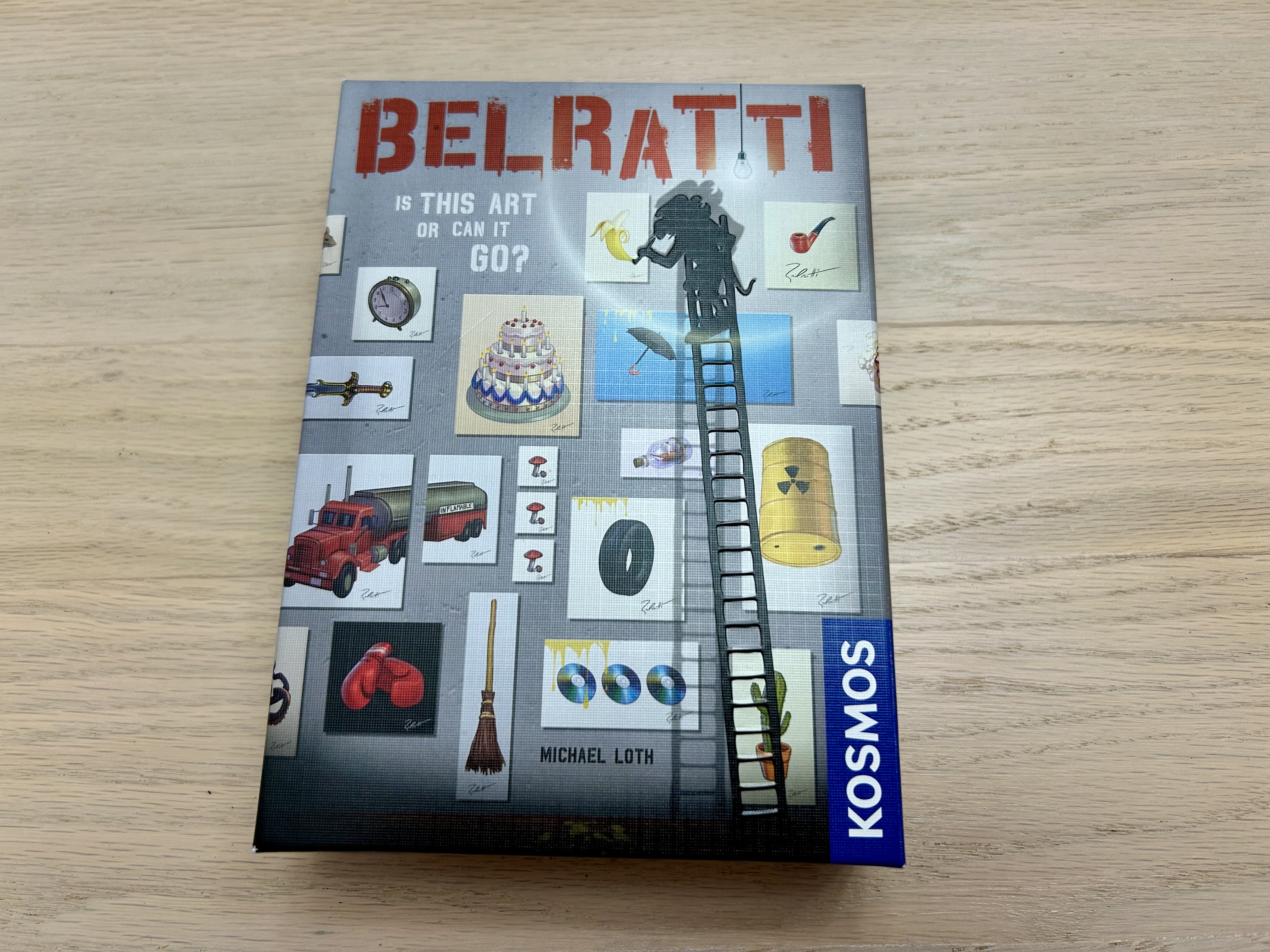
Belratti (KOSMOS) gives players the chance to create masterfully designed art exhibits, but the great art forger Belratti hopes to sneak his own designs into the Modern Art Museum instead. It’s a cooperative game of theming and concept connection, which will have players pondering over what is intentional art and what is simple random chaos.
In Belratti players will take turns playing painter or art director. The painters will want to connect their secretly played art cards to the revealed theme cards. Then, Belratti will throw in a few secret cards himself. The art directors will then have to assess which cards came from the players and which are randomly added by Belratti.
It’s a game of laughs, cooperation, and stretched connections as players fight for the cause of “authentic” art.
Player Count: 3 – 7
Ages: 8+
Playtime: 25 minutes
GAME PLAY:
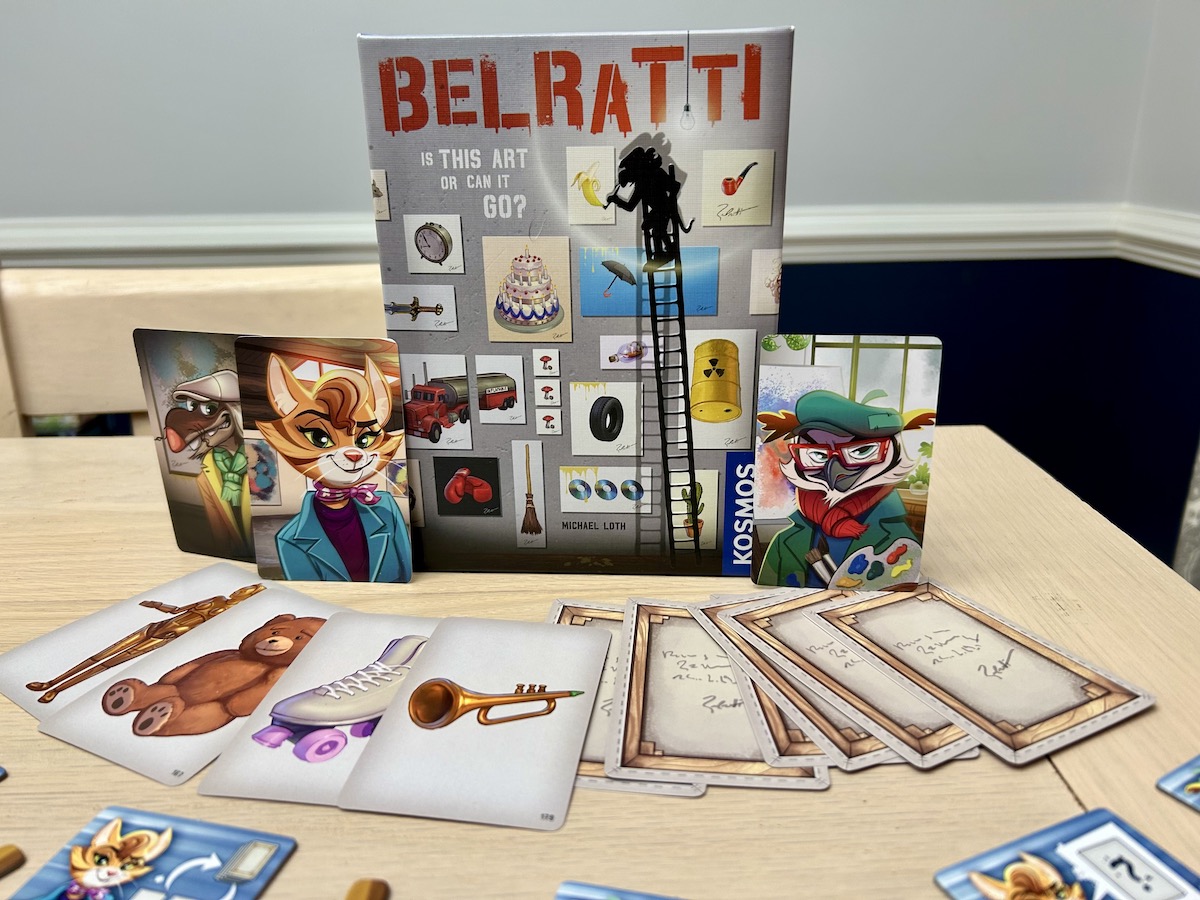
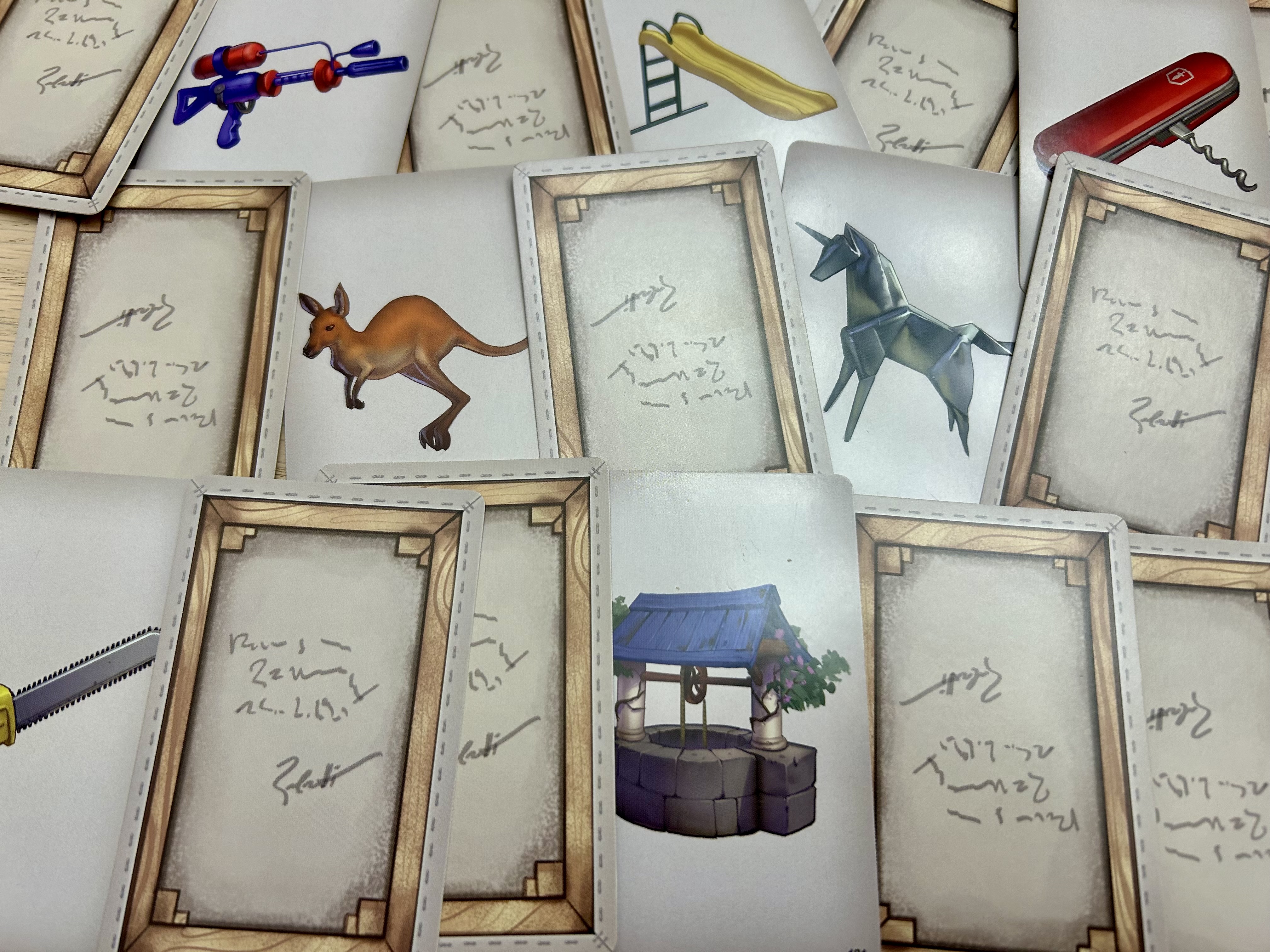
First, players will receive a starting hand of cards based on the number of players. Then, each will be given the role of Dr. Cat or Owl. Again, the number of each role will depend on the size of the play group.
Dr. Cat is the art director. Owl is the painter. Two cards will be revealed from the face down deck of remaining cards. These will be the theme cards that gameplay will revolve around for the round. The team of art directors will decide how many paintings (cards from owls) that they want. They must choose between three and seven.
Next, The Owls/painters will need to submit enough cards to meet the art directors’ request. Players may submit any number in any combination from players as long as they reach the required amount. The painters should discuss how many cards each will turn in and how well they think their cards may fit the theme cards. However, they may not reveal cards to each other or give any specifics about their cards (picture, color, details, etc). Each painting turned in will be placed facedown next to one of the the two theme cards.
After the paintings have been submitted, Belratti will throw in four face down cards from the deck. The cards will be shuffled and then laid out face up. Now, the art directors must decide which paintings came from the players and which go to each of the theme cards. Once the art directors have made their final decisions, players will claim their cards and reveal how well the art directors have done. For every correct card, the art directors score one point. If a player painting is assigned to the wrong theme card, it is simply discarded. However, any of Belratti’s randomly played cards will be placed with the Belratti card. If Belratti ever gets six or more cards, the game ends at the end of the round and final scores are tallied.
If the game doesn’t end at the end of a round, role cards will be rotated clockwise, and another round will be played in the same fashion as the first. Gameplay continues until Belratti successfully passes off six or more forgeries. Players points will correspond to a score guide in the rule book so they can assess how well they played.
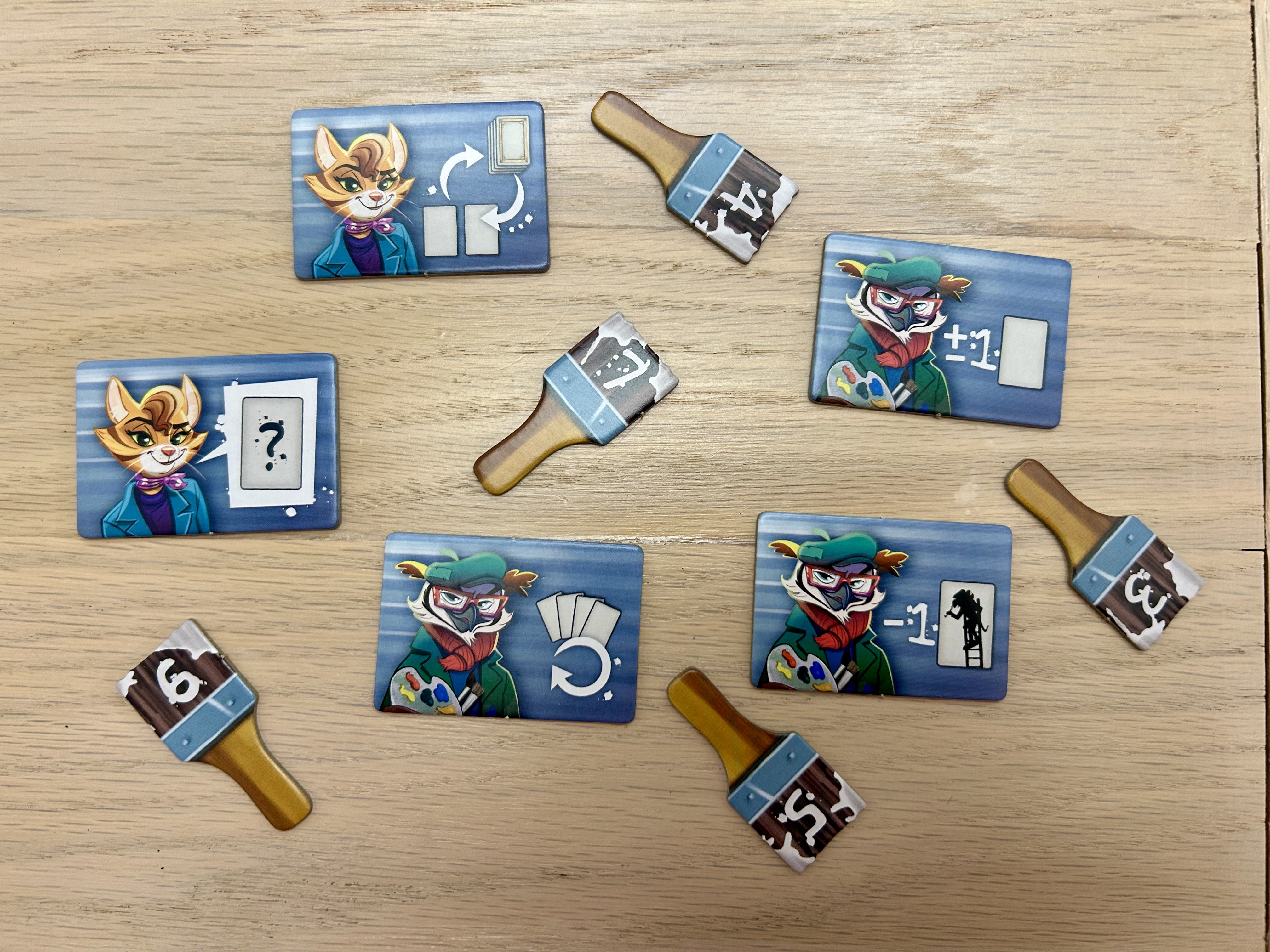
There are also joker tiles which can be used once before becoming unusable and locked. Each tile gives players a little help, from allowing them to switch out theme cards to making Belratti play one fewer card. Players may earn back joker tiles by playing perfect rounds.
It’s a cooperative game of playing off images and themes, but Belratti hopes a little random luck and connections may put him ahead of the players.
OUR THOUGHTS:
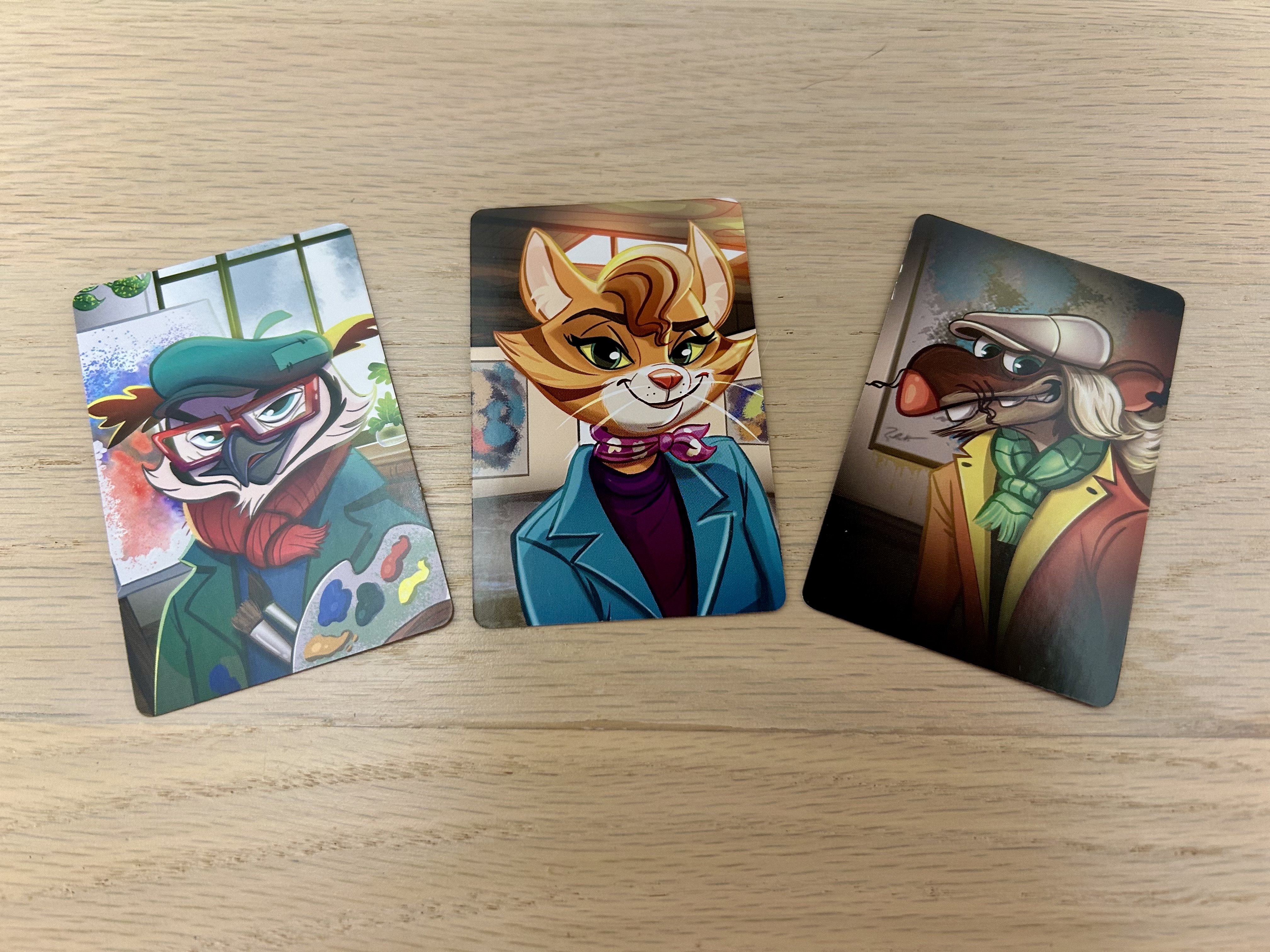
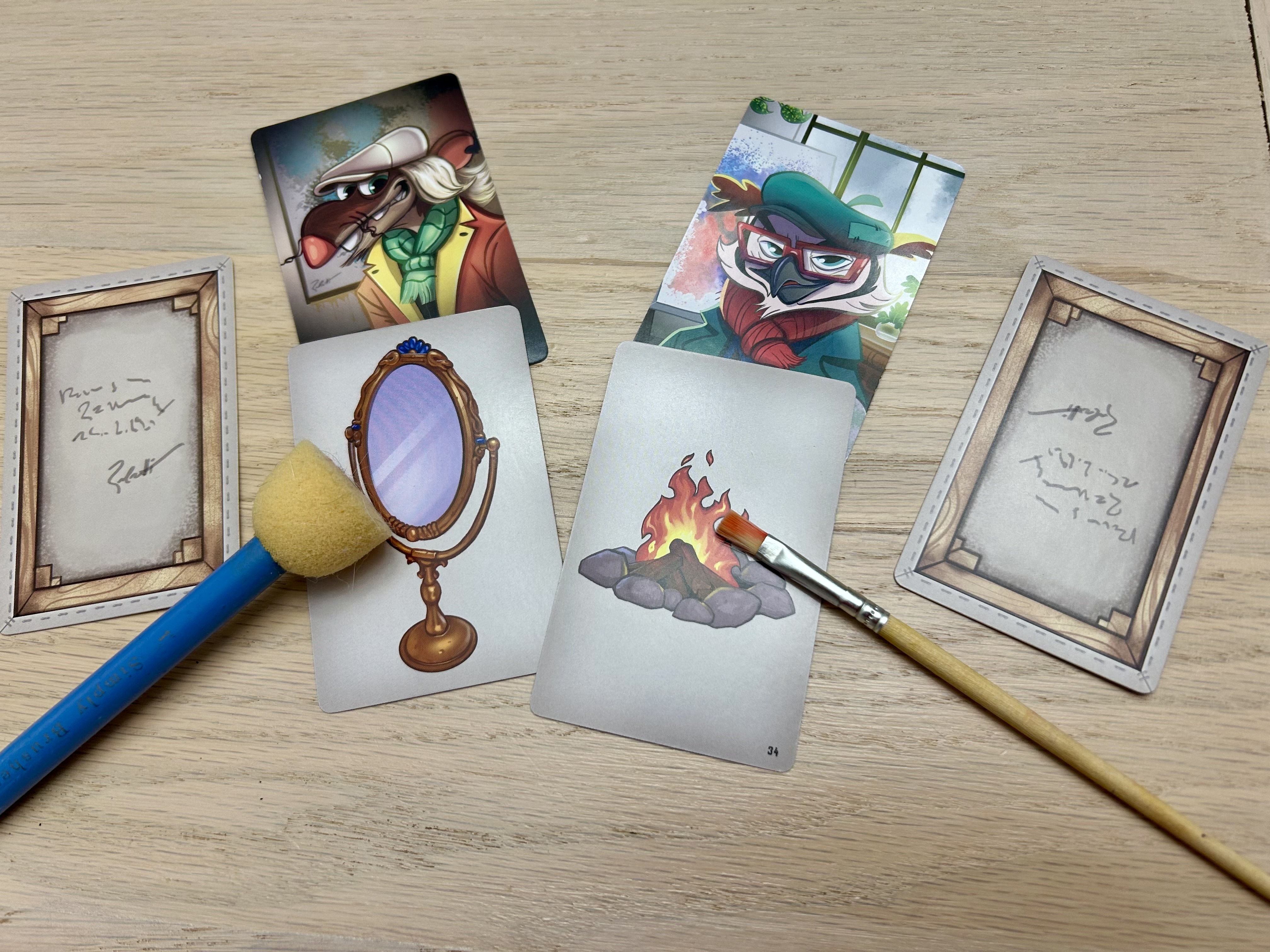
Belratti created fantastic experiences for our playgroups. After a brief summary of the rules, we were able to jump right in. We quickly found ourselves laughing and debating over all the different connections we could make between cards. Almost anything can seem intentional with enough imagination. It’s crazy how perfect randomly played cards can seem with a little overthinking. Every round we had to eventually accept that we were as happy as we’d be with our decisions and lock in our final answers, taking mini leaps of faith. Sometimes that lead to triumph and cheers. Other times that lead to “duh” moments, someone getting to tell everyone else “I told you!,” or the artists questioning the deduction skills of the directors.
Both roles, Dr. Cat and Owl, are fun to take on. The painter owls must carefully select their cards and then pray that others might think like them. The Dr. Cats get the fun of debate and analysis, questioning theirs and others’ senses. A lot of the fun also came from the post-reveal breakdowns of everyone’s thought processes.
The art cards themselves are great with distinct and easily recognizable images. There is plenty of diversity amongst subjects and themes, which helps keep gameplay both challenging and doable. We also liked all the pop culture references, which are fun but there is no need to understand them to enjoy the game.
This is a simple game that packs a lot of fun. With the large art card deck and its randomness, Belratti leaves itself open to a lot of replayability. We’re already planning to bring this one to our next group gathering.
FINAL RECOMMENDATIONS:
Anyone looking for an exciting party game can’t go wrong with Belratti. The ease of learning and play makes the game accessible to anyone. No matter who you are, you can make connections between random pieces of art; the question just becomes how aligned can you get with the rest of the group. We give Belratti a strong recommendation. This should be a good fit for anyone hoping for a lighter party game that can easily hit the table.
Disclaimer: we were sent a free copy of Belratti, but with no requirements/expectations of a review. all thoughts and opinions are our own.



 Chaos & Confetti
Leave a comment