
From the creators of popular games like Too Many Bones and Burn Cycle comes a collection of games focused on younger gamers.
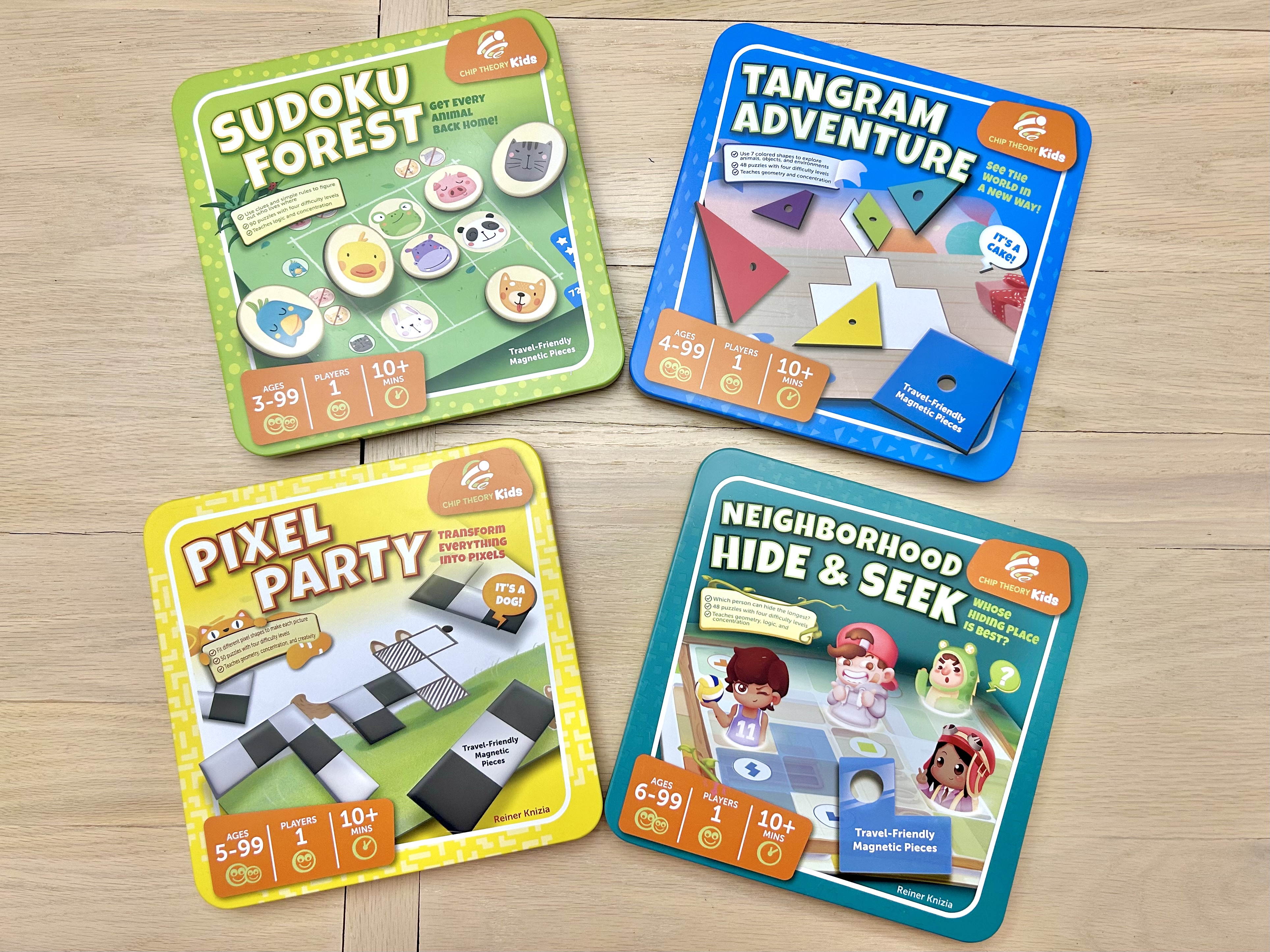
Chip Theory Games’ Independent Play Collection is made up of four games that children can take on alone or with the help of an adult. The games challenge kids’ logical, deductive, and spatial reasoning. With over a hundred puzzles that scale in difficulty, this experience can provide hours of entertainment and skill building.
For fans of Chip Theory Games’ other franchises, this collection comes with a promos pack that add a little flavor to each included game that will tie into Chip Theory’s other franchises.
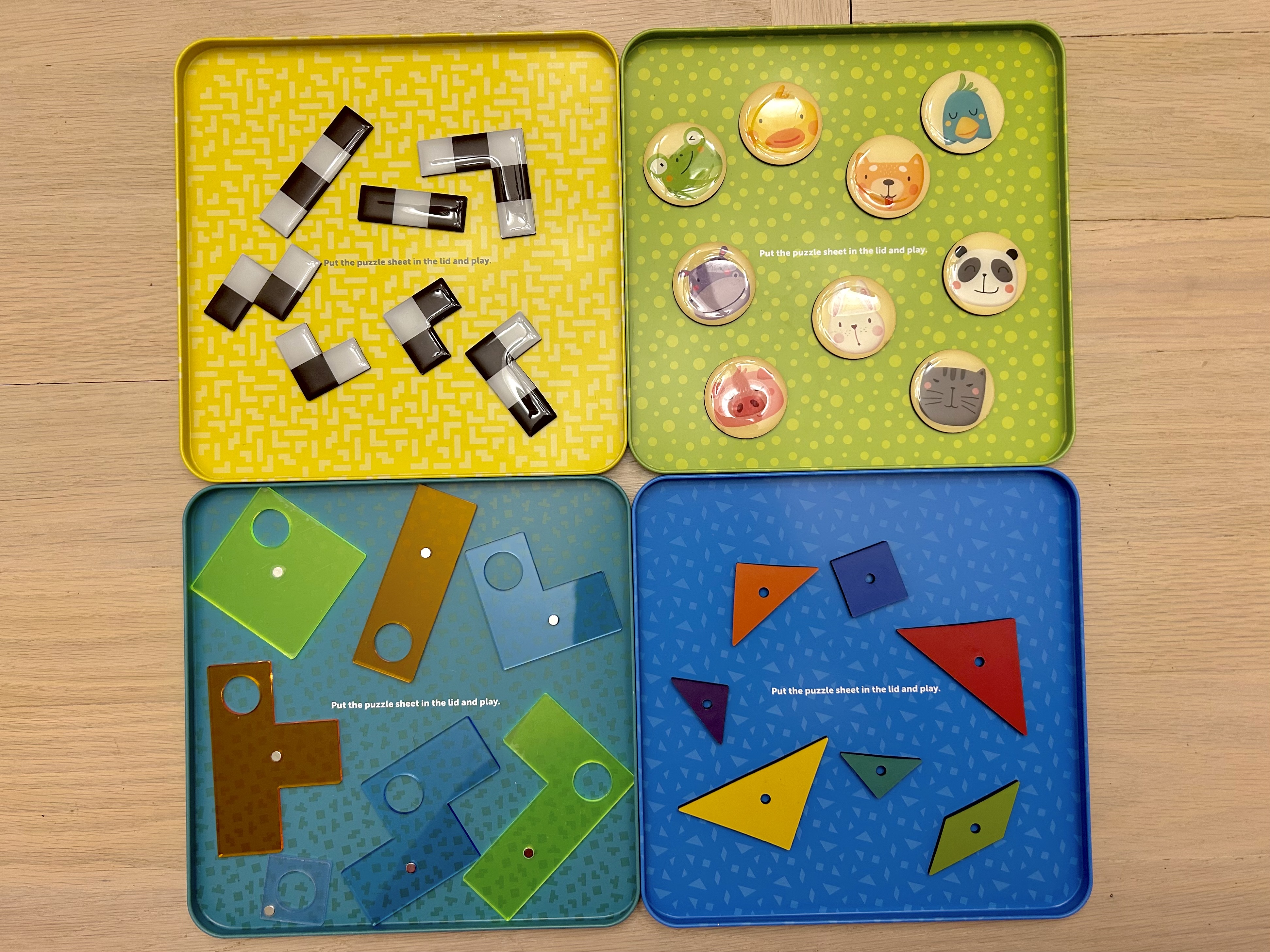
The games are made of magnetic game pieces, metal tin cases, and high quality card stock paper, which makes these games perfect for little hands and travelling.
Player Count: 1+
Ages: 3+
Playtime: 5 – 15 minutes
GAME PLAY:
The Independent Play collection is made up of four different game experiences. Each experience comes with multiple double sided cards with puzzles for kids to explore and solve. Every game tin houses dozens of cards, for example, Animal Sudoku comes with 90 unique puzzles.
The cards are numerically numbered and the challenge increases with the numbering. Kids will go from learning basic game rules and mechanics in the early challenges to eventually taking on puzzles that even adults would need to spend some time thinking over. However, there is no need to complete the puzzles in any specific order since each one is stand alone.
To play, kids will select a puzzle card, place it in the top half of the metal tin, and then use magnetic game pieces to find their answer. The game cards will always tell kids exactly which magnetic pieces they will need for each puzzle.
Though all four games follow a similar structure, which makes it easy for kids to follow along, each provides a pretty unique experience. Here’s some details about each game:
Sudoku Forest (recommend age: 3+):
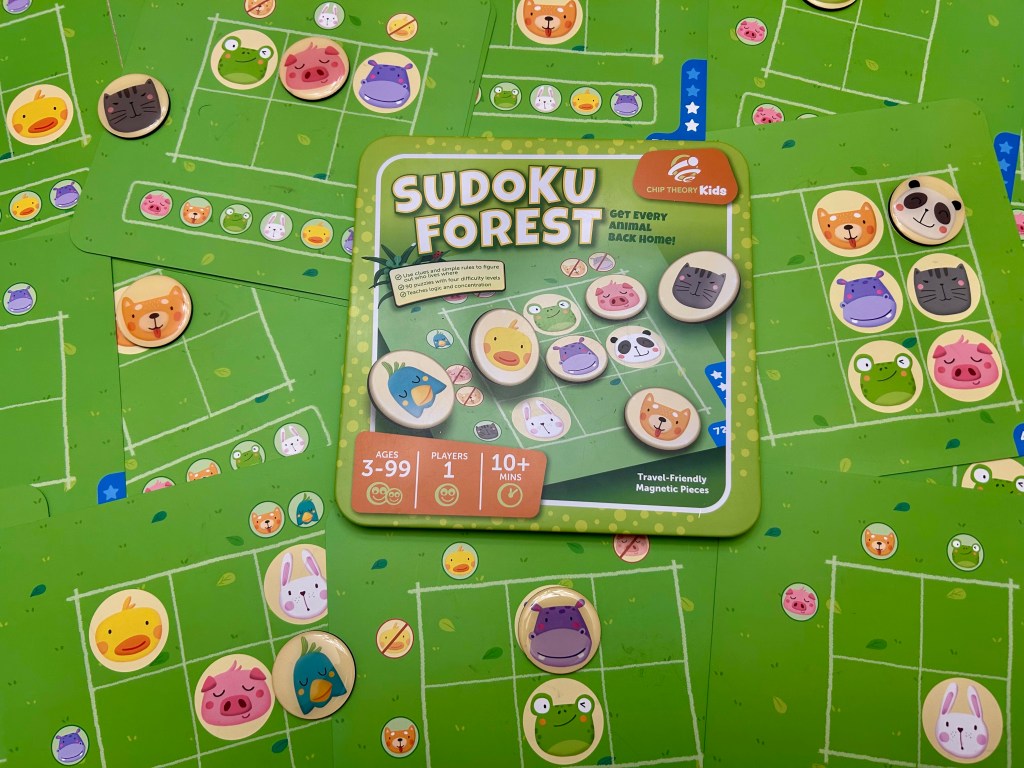
Like classic Sudoku, this game is all about figuring out what should occupy every square in a grid. However, instead of numbers, kids will use cute animal magnets.
Kids start with some limited information that will guide them towards a solution. Information comes in three different varieties. One way is that sometimes the correct positions of some animals will already be marked, so kids have locked in pieces they must work around. Information may also come in pictures surrounding the grid. If an animal picture is present at the edge of a row or column, it means that animal must be present somewhere in that row or column. If an animal picture with a red cross mark is present at the edge of a row or column, it means that animal cannot be placed in that row or column.
Using logic and deduction, kids will figure out how to fill their grid with the appropriate animals. Puzzles range from a 2×2 grid using four animals to a 3×3 grid using nine animal magnets.
Tangram Adventure (recommended age 4+):
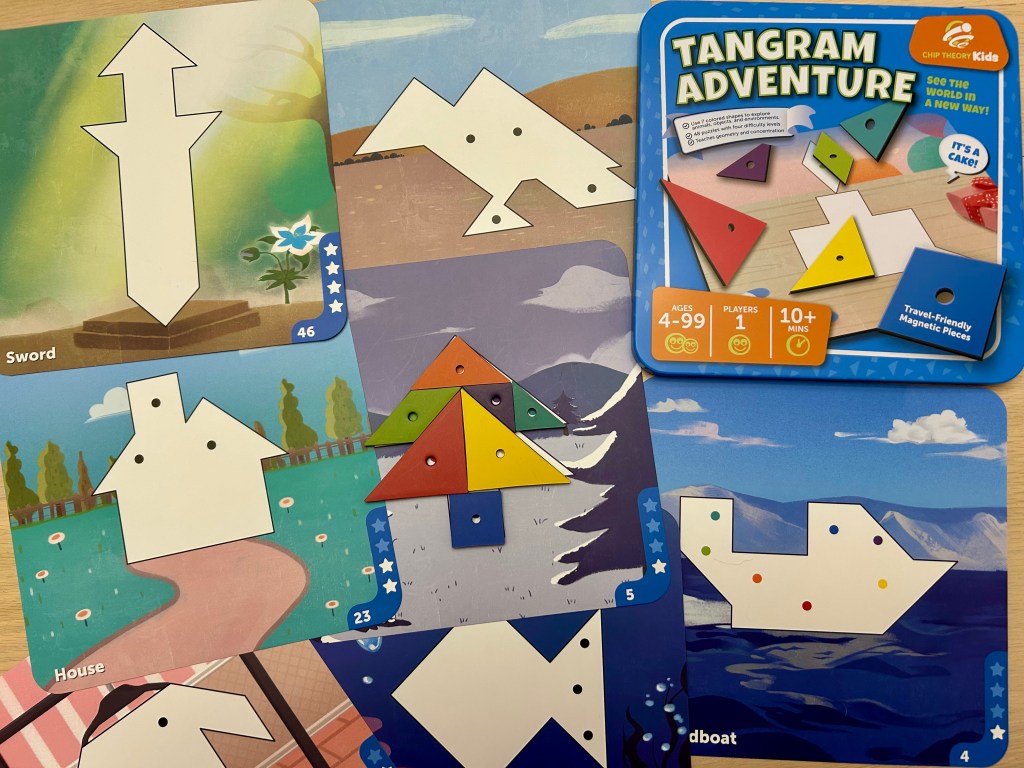
In Tangram Adventure, kids are given an image they must recreate using smaller shape magnets. From giraffes to planes to windmills, kids will use triangles, squares, and more to fill in image outlines to match their intended image.
At first, the outlines will indicate a general area where specific shapes should go, providing colored dots that match shapes, but no orientation. Then, the colors will go away, just letting kids know that a shape should go in a general spot. Eventually, kids will only be provided outlines, and they’ll need to figure out all the shape placements by themselves.
Spatial reasoning, along with trial and error, are the keys to mastering Tangram Adventure.
Pixel Party (recommended age 5+):
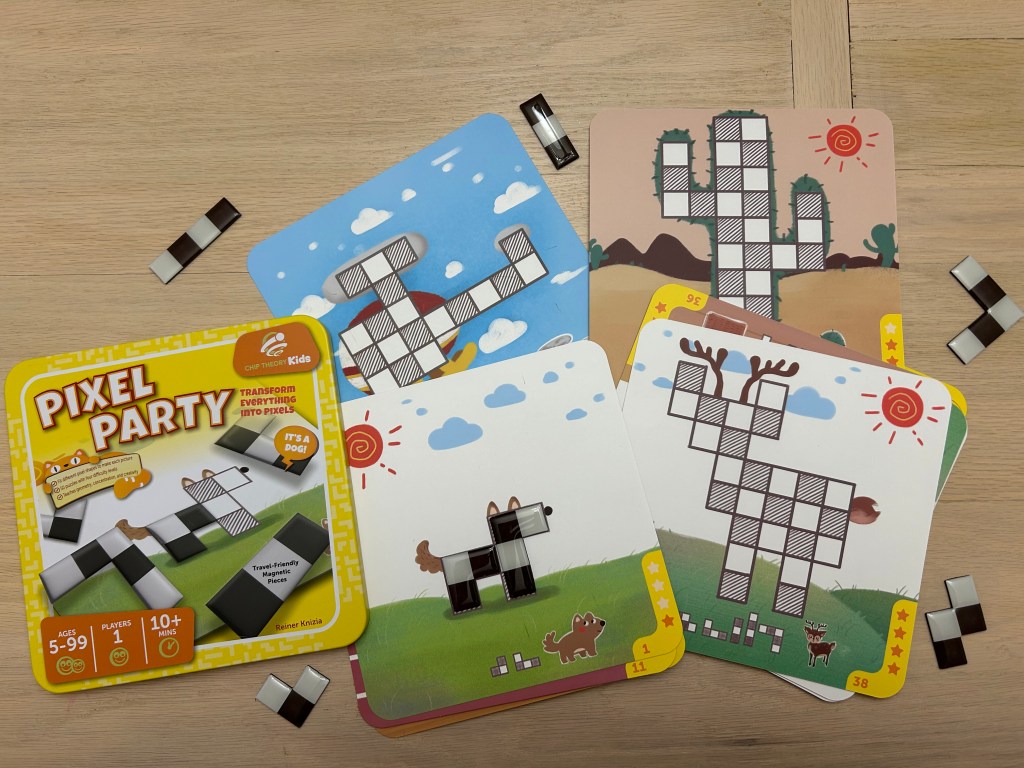
Like in Tangram Adventure, Pixel Party asks kids to fill in outlined shapes that make up images: dogs, hearts, keys, etc. This time though, they’ll be using different sized and shaped reminiscent of Tetris blocks combined with crosswords or chess boards. Kids will orient and place their magnets, hoping to not only fill in the outline, but to also match up the white and black squares on both their magnet and game card.
The shapes start off pretty easy and use only the game pieces. Eventually though, the images become much more complex and require the entire collection of magnetic game pieces.
Neighborhood Hide & Seek (recommended age 6+):

The theme here is a game of hide-and-seek where the player must “find” hiders one by one until a final winner is revealed. Kids will place uniquely shaped and colored tiles on the game’s grid. They will know where one piece of the tile goes but the orientation will be up to them to figure out. If done correctly, all of the tiles will fit within the grid and all but one hide-and-seeker will be covered. That is the winner!
Like the other Independent Play collection games, Neighborhood Hide & Seek also has many scenarios that increase in difficulty. Soon kids will know that a specific tile must be used, but that it may be in one of several spots, or they’ll know that a tile must be placed in a spot, but they won’t be told which kind of tile.
This game deserves its spot as the highest minimum suggested age game in the collection, but it still feels quite doable for the age-group.
OUR EXPERIENCE:
Our three year old son has been into board games for a while now, taking interest in our large game collection and slowly building one of his own. So, when he found out he had more games he could play, he was excited. We introduced the Independent Play Collection to him one game at a time over a few weeks, and again and again, he fell in love.
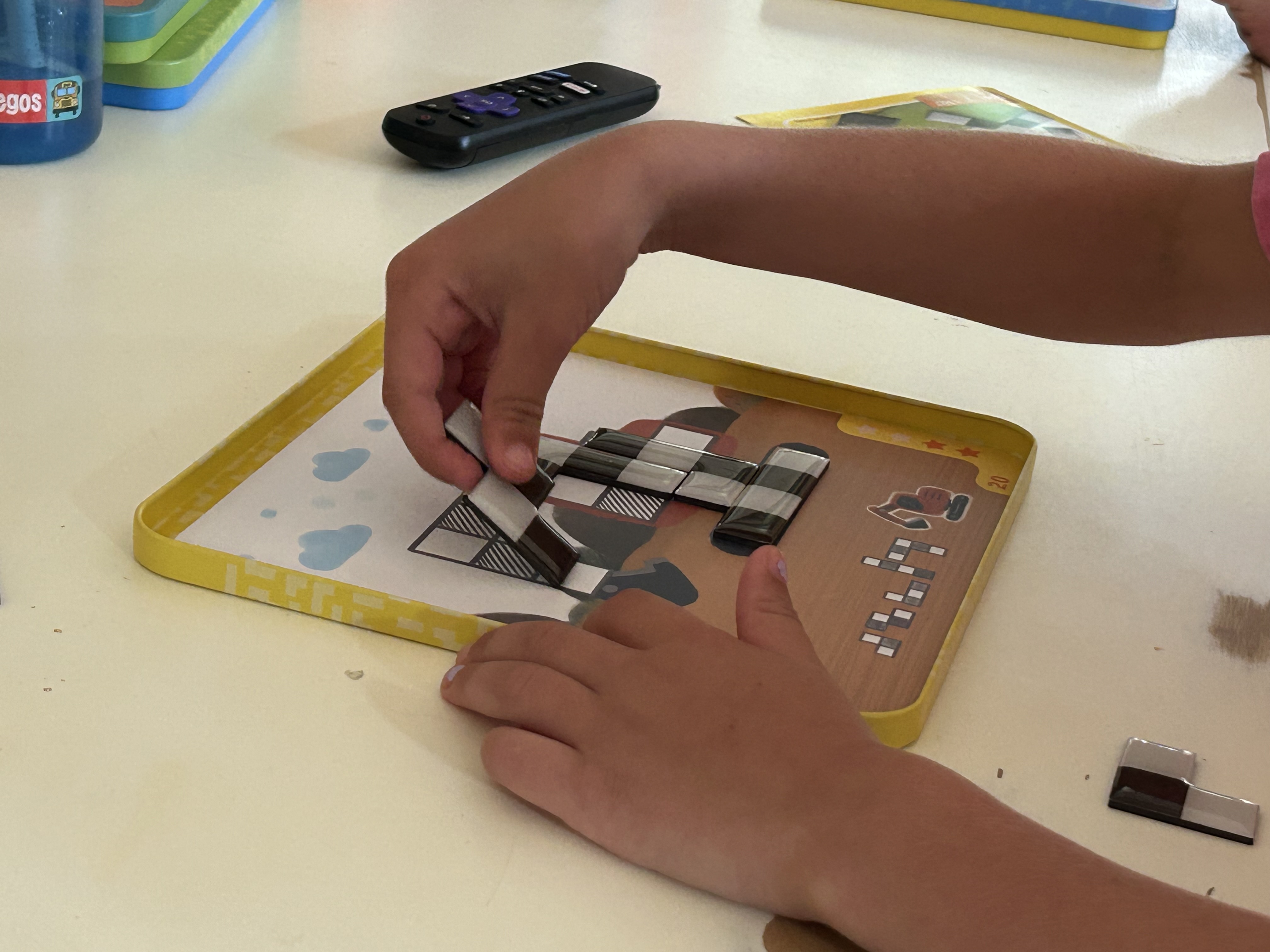

We started with Sudoku Forest and that game remains his absolute favorite of the collection. The first time he encountered the game, he worked through the first 30-ish puzzles, mastering the mechanics and slowly working through tougher challenges. Seeing the joy on his face as conquered the game’s challenges was priceless, but I especially loved the pride he felt in himself and how he kept bragging about how smart he was for solving puzzles.
While the rest of the games were technically above our son’s age group, he still found a lot of entertainment from their beginning levels. It took some more guidance and scaffolding to support his efforts on higher levels across the games and for the older-aimed ones. However, he still liked the task of figuring things out and manipulating the magnet pieces.
I’m excited to see my son build skills and revisit these puzzles as he grows up. Speaking of older kids, we also let our 8 and 10 year old nieces play with the Independent Play Collection during a family beach week. Once again, the games were a hit. They, especially the eight year-old, really liked the games. We left the collection out on the coffee table all week, and the games kept coming back out all week. With the puzzles being stand alone and quick, we often saw the eight year-old tackling a puzzle during down times or roping in an adult to take on a harder puzzle.
It’s not an exaggeration to say the harder puzzles work well for an older audience as well. After helping my son master the lower and mid-range puzzles, I couldn’t help attempting the harder ones just to see if I could do them. Also, when visiting our house, my 60+ year old mother loved working on puzzles with my son and then also wanted to check out the harder puzzles too.
Between us, I’m thinking of getting a copy for my school library because I think even high schoolers will enjoy having some tactile logic puzzles to work through.
OUR THOUGHTS:
If you can’t tell from our last section, We really like Chip Theory Games’ Independent Play Collection. The games are easy enough for a young child to learn and enjoy, but the scaling challenge makes it fun for all ages.
These puzzle experiences are flexible enough where a child can spend a few minutes on one here and there, or fun enough to sit for extended periods, knocking a bunch out in a row. Having a younger child he is happy to revisit the same puzzles multiple times, but thankfully each game comes with dozens of puzzles, so there is a lot of content there for those who don’t want too much repetition.
Chip Theory Games is known for their high quality and durable products, and this game collection is no exception. I really appreciate that durability for a game that is expected to be in the hands of children. My son loved look of the game and the magnet pieces. Also, the magnetic pieces and metal tins also make this a great travel game.
From an educational standpoint, these games are great for working on logic, deductive, and spatial skills while also helping with fine motor skills as they carefully and thoughtfully place their magnets. Though my son sees these as games, even he appreciates the challenge of doing something “smart” as he figures out different puzzles.
The simple but quality design of these games allow them to fit a bunch of potential roles: child’s toy, brain teaser, fidget item, coffee table entertainment, and travel game.
FINAL RECOMMENDATIONS:
If you have a young child in your life, we highly recommend Chip Theory Games’ Independent Play Collection. These are perfect games for both entertainment and skill building purposes. Kids will enjoy playing with them alone or alongside parents. They also work as a dedicated activity or just as puzzles to have around and break into here and there.
Disclaimer: Chip Theory Games gifted us a copy of the Independent Play Collection at PAX Unplugged with no requirements of a review and/or video. All thoughts above are our own (and our son’s!).



 Chaos & Confetti
Leave a comment