
Chaos here!
Story Time:
So, I have a younger sister who lives in another state than me. Every few months we get to see each other in person, and at some point at least one board game is going to get played. Being the older, wiser brother, I usually get a lot of influence on what board game ends up hitting the table. Sometimes it’s a classic I love, other times it’s my latest obsession, and often it’ll be whatever new game I’ve been wanting to try out. Merriment ensues and a good time is had by all. Huzzah!
Then, my sister and her husband will venture back home. The story does not end though. Give it a few days and whatever game I had the pleasure of introducing them to magically ends up on my sister’s Amazon wishlist. Earlier this month, we played a game of The Night Cage and the spooky, cooperative adventure must have hit just right because two days later… Boom! There it was on her wishlist.
It’s happened again and again over the years King of Tokyo, Smash Up, I’m Right You’re Wrong, Red Flags, All of Us, Cat Lady, Unstable Unicorns, Costume Party Detective, Calico, The Quacks of Quedlinburg, Villainous, and more have gone through this or a similar cycle. I can’t really blame her though. I have great tastes in games, and I do tend to push games that I think they’ll enjoy. Of course they want a copy!
Let’s be honest; if you’re a regular player of board games, there is a good chance you’ve played a friends’ copy of a game, enjoyed yourself, and then immediately thought, “I need to buy this.” I know I’ve done this plenty of times.
Sometimes it works out wonderfully. At a friend of a friend’s board game night, I got my first taste of Legendary: A Marvel Deck Building Game, and scooped up a copy for myself very quickly. If you’ve been reading this blog for a bit, you know that I’ve been playing Legendary for over a decade now and have logged hundreds of plays. I can’t get enough of this superhero deck building game and its massive library of cards.
Other times, I’ve been left with buyer’s remorse. A friend brought Quao to a week at a lakehouse and our group played it like crazy. The wacky, hidden-information game had us laughing at its ridiculousness and the silly things it had us doing. We couldn’t get enough of it. I bought a copy of this game too, and sadly it’s seen very little use.
So, what happened here? What’s the difference (besides Legendary being one of the best games of all time)? Let’s take a second to consider a few things when deciding to get a game you’ve just played.

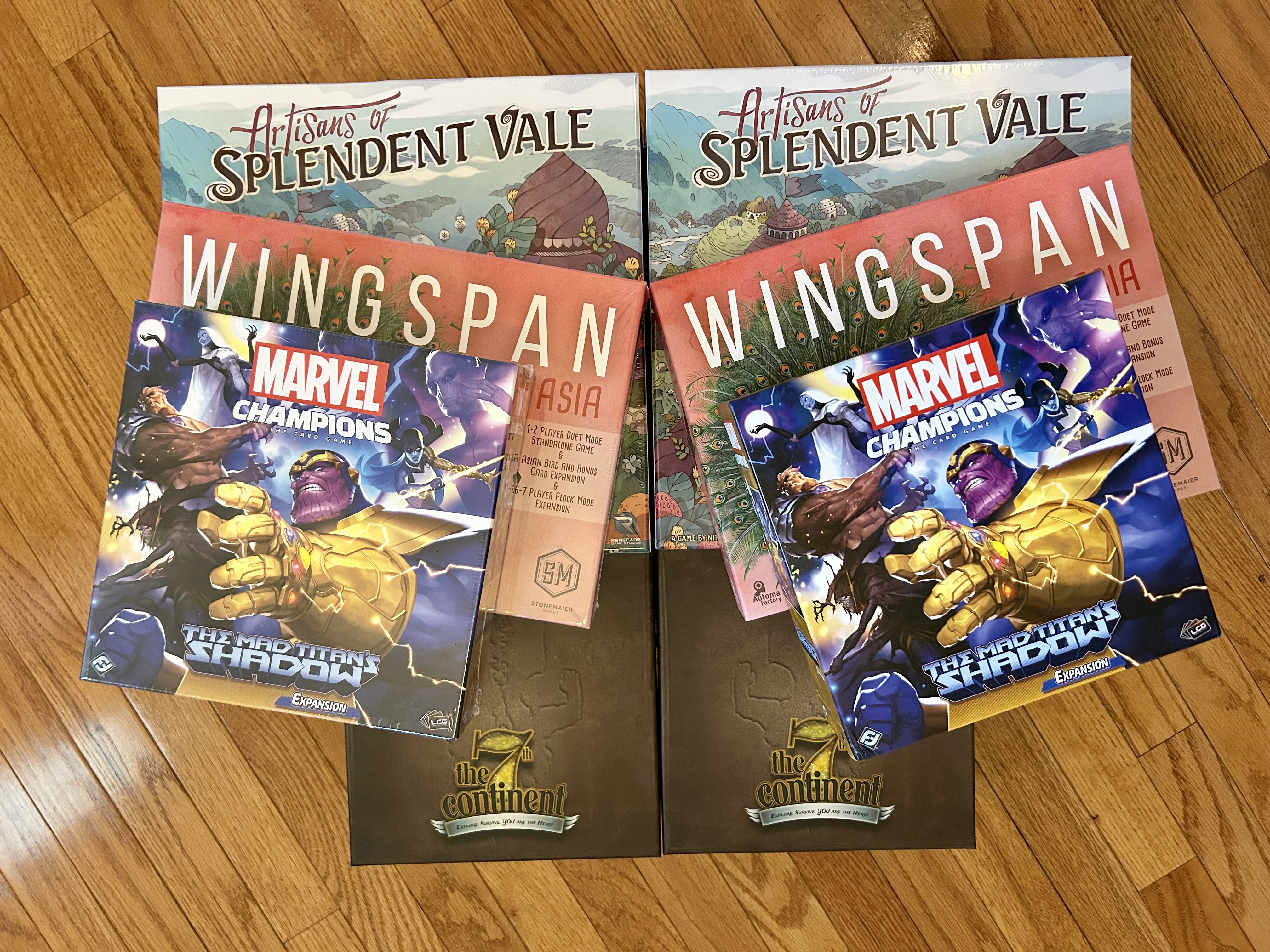
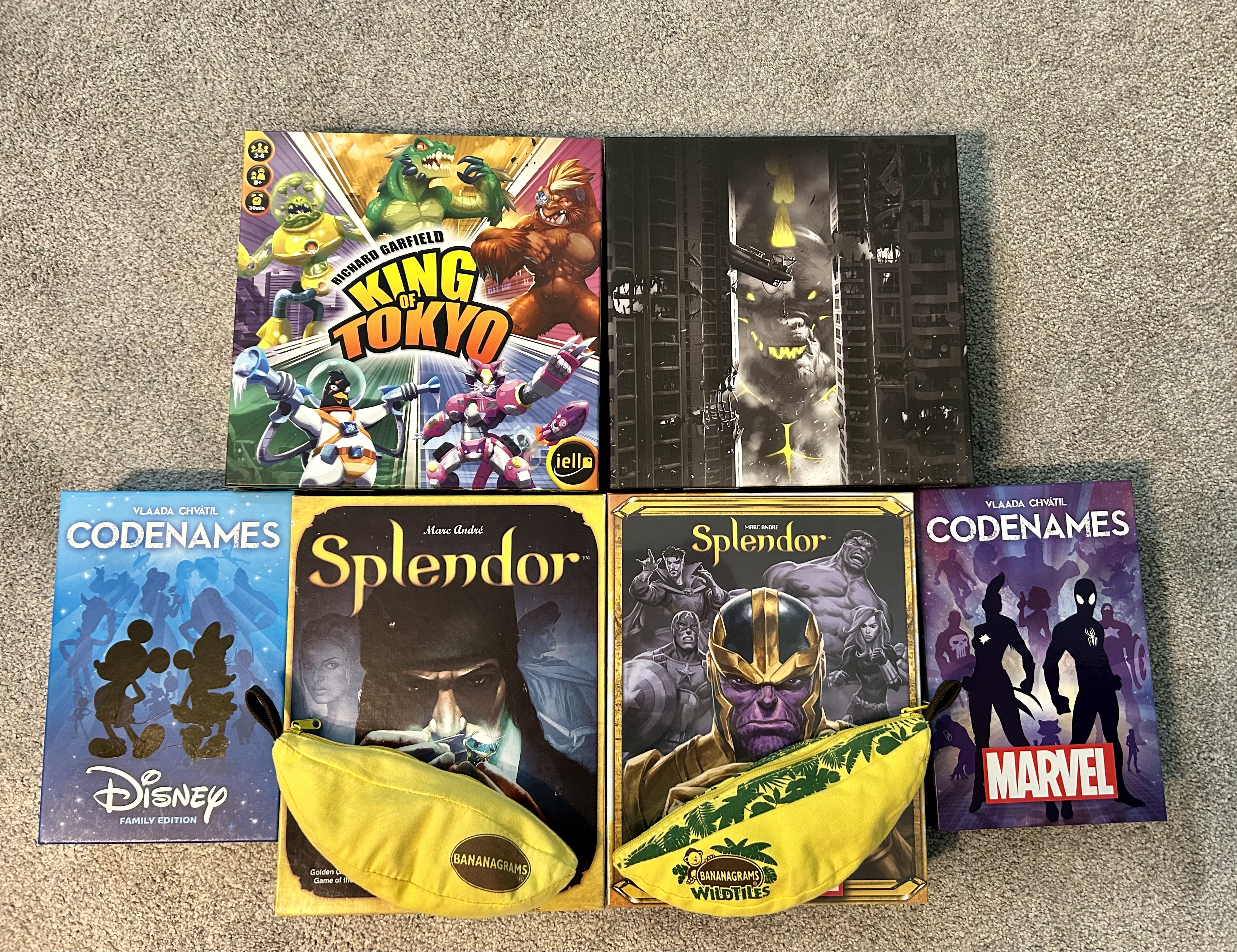
SHOULD I GET THE GAME I JUST PLAYED AT GAME NIGHT?
Access:
The first question should be: Do I need my own copy to play this game?
It made sense for me to buy Legendary all those years ago because a friend of a friend isn’t a reliable source of a game. Buying it to play with my closer gaming group didn’t create a redundancy.
On the other hand, Dominion is a fantastic board game that I will never own. There are several people in my friend group who own copies (including the expansions). If I were ever to play it, it would be with those people, so why do we need extra copies? I can also play it online for free if I ever really get an itch.
It really only makes sense to get a copy of a game if you want to play it away from those who already own it, whether that be with a different group or solo. Maybe think less about your personal game collection and more of your gaming group’s collection in terms of what’s needed.
However, there is also the aspect of burnout. My group had a friend who introduced us to Secret Hitler. For a while, whenever he came to town, we asked to play it. For us, it was an occasional treat. For him, it felt overplayed. So, I can see the argument of having another copy of a game, so one person doesn’t become that game’s person and then loses their desire to play it all. Or, you can just make sure to vary your games.
Replayability:
One of the big differences between Legendary and Quao is the replayability. Legendary is a constantly evolving game with a lot of depth. There is a reason I have been able to play hundreds of games and my wife doesn’t bemoan having to play it again. (Expansions do help)
Meanwhile, Quao is a blast, but like many games of its style, once you’ve heard the joke, it can get pretty old quickly. Games like Apples to Apples, Cards Against Humanity, and other jokey games can wear thin, once they’ve been played a few times and the novelty wears off. Trivia games usually include hundreds or thousands of questions because they want to stick around.
There are also some games that are a lot of fun, but are less likely to come out as much over time. Ask yourself: Is this a game I’ll want to play a lot or am I able to get my fill through playing it occasionally through someone else/have I already gotten what I want out of my past experiences with it?
The Right Group(s):
Ask yourself: Will I actually be able to play this?
Just because I like a game, that doesn’t mean it’s the right one for me. What’s the point of buying a game with a large player count, if I’m not going to be able to get a group together for it?
Not long ago, I introduced my friend group to Feed the Kraken. We all loved the experience, and one of my friends recently went out of his way to track down a deluxe copy for himself. I can only assume he feels confident that he can get enough people together to make this minimum-of-seven-players game work. Otherwise, what would be the point? (Don’t worry, he travels in plenty of social circles).
You also have to make sure you have the group that will want to play the game you’re interested in. Whether it is a party game or a heavy strategy game, you’ll want something you think your other friends might be interested in playing. Otherwise, it’ll just sit on your shelf taunting you because nobody else is interested. (One day, I’ll play you Werewolf Legacy!)
Again, solo games can be immune to this, if you’re actually going to play them by yourself.
The Game or the Moment:
I hate to admit it but sometimes good times are due to the people around you and not just the board game you’re playing.
When considering the purchase of a board game, ask yourself if it was actually the game you were into or another factor. Those factors could include: the other players, the thrill of the get together, the high that comes with being at a gaming convention, yummy food, the fact that you won.
It might not always be the easiest to tell, but you should at least ask yourself: Did I actually like the game itself?
THE WRAP UP:
Looking at it through the lens of the questions above, it actually makes a lot of sense that my sister and her husband would want copies of the great games I introduced them to during their visits. They only see me every once in a while and they have their own friends to play games with. There isn’t much redundancy in their ownership of the same game doesn’t cause much redundancy.
At the end of the day, only you can decide what needs to be in your board game collection and how to best spend your money, but I hope you at least consider a few of my points above. Happy gaming and collecting!
Chaos out!



 Chaos & Confetti
Leave a comment